Most of us don’t really think about how much water we need. We drink water like it’s a game, not realizing how important it is. That big puddle on the gym floor? It shows we don’t really know how to stay hydrated.
Do you remember that SpongeBob episode where Squidward got really dry? That’s what happens to us when we don’t drink enough water, like during a hot run or yoga session. Just drinking water isn’t enough when we’re sweating a lot.
We’re going to talk about why electrolytes are so important. And how using refillable systems can help us stay hydrated in a better way. Our bodies need more than just water; they need the right mix of fluids to stay healthy.
Calculating Sweat Rate and Sodium Needs
Your sweat tells a story more revealing than your browser history. It’s not just your body’s air conditioning. It’s liquid data containing precious electrolytes your muscles need.
Calculating your sweat rate isn’t rocket science. It requires playing detective with your own physiology. Here’s your field guide to becoming the Sherlock Holmes of hydration:
- Weigh yourself naked before your workout (yes, the scale doesn’t judge)
- Exercise for exactly one hour under normal conditions
- Track every ounce of fluid you consume during that hour
- Weigh yourself naked again post-workout (stil not judging)
Do the math: Pre-weight minus post-weight plus fluid consumed equals your hourly sweat rate. Simple, right? This number is your golden ticket to hydration nirvana.
Now let’s talk about the main character in your sweat drama: sodium. This isn’t the villain from your doctor’s lectures. It’s the MVP of your electrolyte team. Sodium does the heavy lifting in fluid balance, nerve function, and preventing muscle cramps.
Most athletes lose between 500-1,500mg of sodium per liter of sweat. The salty sweaters among us can lose up to 2,000mg per hour. That’s enough to season a small batch of fries – which suddenly makes your post-workout cravings make sense, doesn’t it?
Research shows that electrolytes such as sodium, potassium, and magnesium are essential for athletic performance. Ignoring your sodium needs is like trying to run a Tesla on AA batteries – technically possible, but you won’t get far before the warning lights start flashing.
Here’s the reality check: if you finish workouts with salt crystals on your skin or clothing, you’re part of the high-sodium loss club. Welcome! Your membership includes mandatory electrolyte replenishment and slightly saltier than average skin.
The sweet spot? Aim to replace 70-90% of your sodium losses during exercise. For most athletes, this means 300-600mg of sodium per hour of moderate activity, scaling up to 800-1,200mg for heavy sweaters or extreme conditions.
Remember: your sweat rate and sodium needs are as unique as your fingerprint. What works for your running buddy might leave you looking like a salted pretzel. Track, adjust, and listen to what your sweat is trying to tell you – it’s the most honest feedback you’ll get all day.
Product Formats and Packaging Footprints
Welcome to the hydration aisle’s version of Coke versus Pepsi. But here, we’re talking about tablets vs powders and saving the planet. Your choice of electrolyte isn’t just about taste or convenience anymore. It’s an environmental statement that would impress or shock Greta Thunberg.
Let’s look at the facts about your hydration habit’s carbon footprint. Those individually wrapped packets might seem harmless, but they add up to a huge waste problem. The fitness industry’s plastic use is a big issue – it’s like an elephant made of single-use packaging.
The game-changer is compostable packets that break down easily. They’re not just marketing tricks – they’re a way to feel less guilty about using single-use items. When your workout nutrition comes in compostable packaging, you’re helping the environment.
Here’s how the formats compare environmentally:
- Powders: Larger containers, less packaging per serving, but often plastic
- Tablets: Minimal packaging, easy to carry, but often in non-recyclable materials
- Liquid concentrates: Glass or plastic bottles, reusable, and highly concentrated
There’s no perfect solution, but there are better choices based on your lifestyle. Do you need single-serving convenience for races, or can you mix from bulk at home? Your choice affects your environmental impact.
Some companies now offer compostable packets that disappear quickly. These innovations show the fitness industry is learning that performance and sustainability can go together.
The tablets vs powders debate is about your waste tolerance. Can you handle occasional plastic if it means better performance? Or will you choose brands that match your environmental values? The decision is yours, with full knowledge.
If you’re looking for eco-friendly hydration options, contact us for personalized suggestions that are good for your training and the planet.
DIY Low‑Waste Electrolyte Mixes
Ever wonder why hydration companies keep their recipes secret? Let’s make our own electrolyte mix. It’s not only cheaper but also a way to avoid single-use plastics and unknown ingredients.
Making your own mix is like cooking without wearing a hazmat suit. You’ll get precise results and feel good about what you’re putting in your body. Plus, you won’t contribute to landfills.
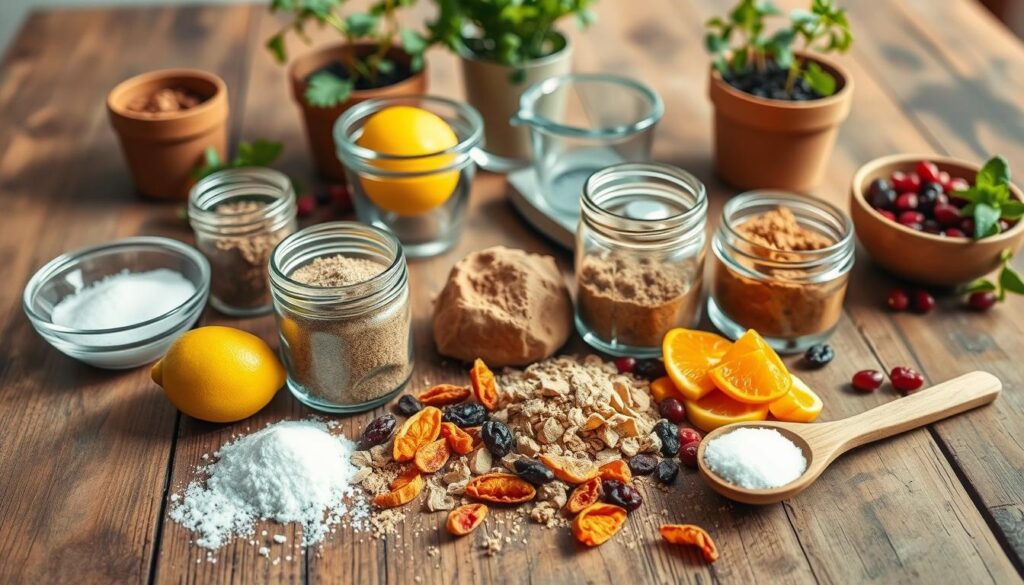
- Sodium – The main electrolyte you lose through sweat
- Potassium – Crucial for muscle function and hydration
- Magnesium – The relaxation mineral that prevents cramping
- Carbohydrates – For energy and absorption enhancement
Customizing your mix is fun. You can adjust it based on your sweat rate, taste, and weather. Want more sodium on hot days? Add natural flavors for sweetness. It’s like being a hydration expert without the fancy words.
Now, let’s look at some recipes. They’re easy, like putting together IKEA furniture:
| Mix Type | Sodium (mg) | Potassium (mg) | Magnesium (mg) | Carbs (g) |
|---|---|---|---|---|
| Basic Hydration | 400 | 200 | 60 | 15 |
| Endurance Blend | 600 | 300 | 80 | 25 |
| Heat Adaptation | 800 | 250 | 100 | 20 |
| Recovery Formula | 500 | 400 | 120 | 30 |
Flavor customization is the best part of DIY mixes. Why choose artificial flavors when you can use real ingredients like:
- Citrus zest from organic lemons or oranges
- Real coconut water powder instead of synthetic sweeteners
- Fresh ginger or mint from your garden
- Hibiscus or chamomile tea extracts
By making your own mix, you reduce packaging waste. You’re not just hydrating; you’re also helping the environment. Your taste buds will love the upgrade, and so will your conscience.
Storing your mix is easy too. Use glass jars, reusable containers, or even old tubs. No more searching for that last packet. You’re in control of your hydration, one scoop at a time.
Ready to make your first batch? Start with the basic recipe and adjust as needed. Your future self will thank you for choosing DIY over packaged products.
Refill, Filter, and Reuse Systems
Single-use plastic bottles are a thing of the past. Modern hydration is about systems that make you feel like you’ve moved forward. Your reusable bottles are more than just containers; they show you’ve left disposable culture behind.
When you mix smart filtration with durable bottles, magic happens. Imagine drinking from mountain streams without fear of giardia. Or refilling from questionable sources, knowing your filter protects you. It’s not just about staying hydrated; it’s about being independent.
I’ve tried systems that turn bad water into something amazing. The CNOC water bladder with a Sawyer Squeeze filter is like a hydration station in your hand. Path Water’s aluminum bottles let you refill without plastic guilt. These aren’t just products; they’re your hydration partners.
Why choose plastic when you can have fresh mountain water? Your reusable bottles get more valuable with each refill. It’s like a fine wine that gets better with age, but without the tannins.
| System Type | Best Use Case | Longevity | Eco-Impact |
|---|---|---|---|
| CNOC + Sawyer Squeeze | Backcountry adventures | 100,000+ gallons | Near-zero waste |
| Path Water bottles | Urban refill culture | Years of daily use | Aluminum infinite recycling |
| Standard reusable bottles | Gym and daily commute | 2-5 years | 90% less plastic waste |
| Glass insulated bottles | Office and home use | Decades with care | Zero plastic contact |
Filtration systems save you money in the long run. They pay for themselves in weeks, compared to buying bottled water. Your reusable bottles become loyal friends, not just temporary solutions.
Think of it as building your own water system. Every refill station you find adds to your hydration network. Every filter clean is maintenance for your water supply. It’s not just drinking water; it’s engineering your resilience.
The best part? You’ll never panic when you run out of plastic bottles again. Your hydration system is as reliable as gravity, but twice as refreshing.
Hydration for Travel and Events
Have you ever seen how airports turn people into zombies? They’re dehydrated and over-caffeinated, holding onto expensive water bottles. Travel hydration doesn’t have to be a sacrifice.
Many smart people lose their hydration plans quickly. The trick is not to carry more stuff. It’s about using smarter systems that work even when things go wrong.
Always have two ways to get water. Use a collapsible bottle with a filter as your main option. For backup, carry electrolyte tablets to make any water safe to drink.
At events and races, think ahead like a stage manager. Find water stations early, but be ready for them to run out. Your reusable bottle can be your secret to staying hydrated.
What sets hydration pros apart from amateurs at long events?
- Modular systems that adapt to changing conditions
- Concentrated solutions that save space and weight
- Redundancy plans for when things inevitably go wrong
The zero waste goal is not about being perfect. It’s about being 80% better than disposable options. Sometimes, using a paper cup is okay if you forgot your bottle. The aim is progress, not to be perfect.
| Situation | Smart Hydration Move | Disaster Avoided |
|---|---|---|
| Airport travel | Empty insulated bottle through security, fill at water station | $5 water bottle purchases and dehydration |
| Multi-day events | Electrolyte concentrate with measuring cap | Electrolyte imbalance and performance crash |
| Remote work sites | Gravity filter system with collapsible reservoir | Plastic bottle waste and water scarcity issues |
| Urban conferences | Sleek stainless bottle that fits under seats | Constant bathroom breaks and missed content |
The best hydration system is the one you’ll use all the time. For some, it’s a high-tech bottle. For others, it’s simple tablets in a reused bottle. The key is repeated use, not being perfect.
Your hydration plan should make you feel ready, not weighed down. Aim to enjoy your journey more and worry less about water.
Cramp Myths vs Evidence
Let’s debunk muscle cramp myths. That sudden charley horse in your calf? It’s not as simple as you might think.
The banana theory of preventing cramps is as weak as flat earth theory. Potassium is important for muscle function, but it’s not the only factor. The real cause of cramps during exercise is often more complex.
Studies reveal that cramps usually come from muscle fatigue, not just dehydration or electrolyte imbalance. Your muscles can get overworked, like a stressed-out intern.
The truth is a mix: intense exercise, muscle fatigue, and sometimes electrolyte issues. It’s like a chaotic meeting where everyone talks at once.
Having the right electrolytes helps with muscle function and prevents cramping. But it’s part of a bigger plan that includes pacing, conditioning, and smart hydration.
Staying hydrated is key because it helps manage fatigue and muscle contractions. But drinking water alone won’t stop a cramp at mile 8.
The best way to prevent cramps? A balanced approach that includes training intensity, recovery, and electrolyte balance. Your muscles need more than just myths and guesses.
When a cramp hits, remember: it’s not just about potassium. It’s your body’s signal to adjust your approach.
Sample Hydration Plans by Session Length
Ever try using the same pickup line on everyone at the bar? Spoiler: it doesn’t work. Your hydration strategy needs the same customization. A 30-minute yoga session and a 4-hour mountain trek demand completely different approaches.
Proper hydration isn’t about chugging – it’s strategic sipping. These protocols are more reliable than your GPS in a tunnel. Because winging your hydration is like baking without a recipe. Possible, but likely disappointing.
Workplace hydration protocols show that consistent, measured intake beats chaotic guzzling. Backpacking trips reveal how terrain and pack weight change everything. Your hydration strategy should adapt like your playlist between workouts and Netflix binges.
Let’s break down sample plans that actually make sense:
| Session Length | Activity Type | Fluid Intake | Electrolyte Focus | Pro Tip |
|---|---|---|---|---|
| 30-60 min | Yoga/light cardio | 16-20 oz water | Minimal sodium | Pre-hydrate only |
| 1-2 hours | Running/cycling | 20-32 oz electrolyte mix | 300-500mg sodium/hour | Sip every 15 min |
| 2-4 hours | Hiking/backpacking | 32-48 oz electrolyte fluid | 500-700mg sodium/hour | Weigh pack pre/post |
| 4+ hours | Endurance events | 48-64 oz customized mix | 700-1000mg sodium/hour | Test gut tolerance |
Notice how sodium needs escalate with duration and intensity? That’s not arbitrary – it’s science. Research from the National Institutes of Health confirms electrolyte balance becomes critical beyond the 60-minute mark.
For short sessions, water usually suffices. Your body’s electrolyte stores can handle brief efforts. But once you cross into hour territory, you’re dipping into reserves that need replenishing.
Long adventures? That’s where bulk hydration packs and strategic planning separate the thriving from the barely surviving. Your hydration strategy should account for temperature, elevation gain, and even backpack weight.
Remember: these are templates, not commandments. Adjust based on your sweat rate, weather conditions, and how your body responds. The best plan is the one you’ll actually follow consistently.
Gear Checklist and Maintenance
Your hydration gear should be organized, not like that messy drawer everyone ignores. It’s filled with things bought on impulse. Let’s make a system that’s as reliable as your favorite podcast.
The CNOC system is key. It’s like a hydration Swiss Army knife. Add a Sawyer Squeeze filter, and you’ll be ready for anything. These items are essential, not just extras.
Reusable bags are also important. They’re like the secret heroes of hydration, folding up small. But, choose quality bags to avoid them breaking down quickly.
Now, let’s talk about gear maintenance. Your refillable bottles need regular care. Cleaning them is not optional. It’s what makes the difference between a pro and someone who wonders why their water tastes bad.
Here’s a must-follow cleaning protocol:
- Hot water rinse after every use (think shower temperature, not lava)
- Weekly deep clean with baking soda or specialized tablet
- Complete air dry before storage – moisture is mold’s best friend
- Monthly seal inspection – because leaks ruin days faster than bad news
Storage is just as important as cleaning. Don’t hide your gear in dark spots. Keep it easy to find, visible, and ready to go. Good storage helps your gear last longer than most celebrity marriages.
Quality checks should happen often. Look for wear, strange smells, or performance issues. Your gear will tell you when it’s not doing well. You just need to listen better than you do to your partner’s work stories.
Good hydration gear maintained well lasts longer than trends, relationships, and most phones. It’s a key partner in every successful workout and personal achievement.
This isn’t just about avoiding gear failure. It’s about making hydration automatic. Like complaining about the weather or pretending to remember someone’s name at parties.
Safety and Red‑Flag Symptoms
Your hydration plan needs an exit strategy. It’s like having OSHA rules for your body. Sometimes, stopping is the best thing to do.
Your body sends clear warning signs. Feeling dizzy when you stop moving? That’s not just tiredness. It’s a sign your body is shutting down.
Nausea that won’t go away? Your body is unhappy and wants to speak up. These signs mean it’s time to stop and listen.
Headaches, confusion, and no sweat on a hot day? These are serious signs. They mean you should stop before it’s too late.
Health always comes first, not beating records. Feeling dizzy or clammy? Your hydration plan has failed. Listen to your body’s warnings.
Seeing these signs isn’t weak. It’s smart. It shows you care about your body’s safety. Your next record can wait. Your health can’t.