

Ever notice the irony? Athletes wear sustainable activewear but drink protein shakes from plastic bottles. It’s like wearing a “Save the Whales” t-shirt to a seafood buffet.
But here’s the plot twist: what if your eco-friendly nutrition choices could actually boost your performance? This isn’t just another greenwashing trend. It’s the ultimate crossover episode where your fitness journey meets environmental consciousness.
Think about it: oxidative stress from intense training mirrors our planet’s stress from unsustainable practices. Both need smart antioxidant strategies, whether we’re talking cellular repair or carbon footprint reduction.
Your grocery store choices impact more than just your personal bests. They shape our planet’s future too. Let’s explore how sustainable sports nutrition becomes a performance-enhancing strategy that works for both you and Mother Earth.
Performance and Planet: The Dual Goal
Ever feel like you’re choosing between breaking personal records and breaking the planet? That plastic-wrapped energy bar versus… well, nothing because sustainable options seem as rare as a peaceful political debate? Let’s call this what it is: a false dilemma manufactured by convenience culture.
The truth is, your athlete diet and environmental impact aren’t opposing forces. They’re training partners. What fuels your mitochondria—those cellular power plants—also impacts our actual power plants. It’s about working smarter, not harder, for both personal and planetary gains.
Consider this: producing 1kg of beef protein requires 18 times more land than kidney beans. That’s not just a statistic—it’s a strategic insight. For performance-minded athletes, this data should hit harder than a pre-dawn alarm clock.
The environmental math is undeniable. Animal-based proteins typically generate higher greenhouse gas emissions than plant-based alternatives. Your carbon footprint isn’t just about transportation; it’s on your plate every single day.
But here’s the beautiful part: the same foods that reduce your environmental impact often enhance athletic performance. Plant-based proteins provide clean energy without the inflammatory side effects of some animal products. They’re like the political moderate of nutrition—working effectively without dramatic flare-ups.
A recent study confirms that sustainable nutrition supports both physiological equilibrium and environmental balance. The researchers found that athletes following planet-conscious diets maintained excellent energy levels while reducing their ecological impact.
Let’s break down the numbers comparing protein sources:
| Protein Source | Land Use (m² per kg) | Greenhouse Gas (kg CO₂ per kg) | Performance Benefits |
|---|---|---|---|
| Beef | 164 | 27.0 | Complete protein, high iron |
| Chicken | 53 | 6.9 | Lean protein, versatile |
| Lentils | 9 | 0.9 | High fiber, sustained energy |
| Kidney Beans | 11 | 1.2 | Complex carbs, muscle recovery |
| Tofu | 13 | 2.0 | Complete protein, anti-inflammatory |
Notice how the plant-based options punch above their weight? They deliver performance benefits with dramatically lower environmental costs. It’s like finding a political candidate who actually keeps their promises—rare and valuable.
Your athlete diet becomes a powerful tool for change when you align nutritional needs with environmental awareness. The goal isn’t perfection—it’s progress. Each sustainable choice compounds like interest in your health and the planet’s future.
Think of it as dual-periodization training: you’re periodizing for peak performance while simultaneously periodizing for planetary health. The same strategic thinking that gets you through marathon training applies to reducing your carbon footprint.
This isn’t about sacrifice. It’s about upgrading your fuel strategy. When you choose foods that work with the environment, you’re not just eating—you’re voting with your fork for a better world and better performance.
Core Principles (Whole Foods, Seasonal, Minimal Waste)
Your grandma knew a thing or two about eating right. She didn’t need fancy labels or exotic foods. Her kitchen followed three simple rules: eat real food, buy what’s in season, and don’t waste anything.
Whole foods are just what they sound like – ingredients that look like they’re supposed to. Think of apples that are actually apples, not protein bars that look like building blocks. Choosing whole foods is a basic way to sustainable sourcing – buying products that haven’t been processed too much.
Seasonal eating is nature’s perfect timing. Summer berries are full of antioxidants when your body needs them most. Winter squash gives you complex carbs when you need energy for cold weather.
Studies show seasonal produce has up to 30% more nutrients than out-of-season food. Here’s a table of some antioxidant-rich foods:
| Season | Food | Key Antioxidants |
|---|---|---|
| Spring | Spinach | Lutein, Zeaxanthin |
| Summer | Berries | Anthocyanins |
| Fall | Apples | Quercetin |
| Winter | Citrus | Vitamin C |
Minimal waste isn’t just about saving the planet. It’s also about how your body works best. Using whole vegetables gives you more fiber, which helps your gut. A healthy gut means better nutrient absorption and recovery.
These principles make you a performance powerhouse:
- Whole foods give you nutrients without chemicals
- Seasonal choices mean better flavor and nutrition
- Minimal waste saves you money
Smart sustainable sourcing also means thinking about recyclable packaging. But the best choice? Buying loose produce that doesn’t need packaging at all.
Your grandma’s food approach is the ultimate performance hack. It’s not just good for the planet. It’s what champions are made of.
Sourcing Smart: Certifications and labels to know
Reading food labels can be like trying to read Ulysses while doing burpees. It’s hard and slow. The grocery store is filled with labels that claim to be ethical. But which ones really matter for your health and the planet’s?
USDA Organic is a big deal. It’s not just about avoiding pesticides. It’s about soil health and nutrients. Studies show organic food often has more antioxidants, which are good for your muscles.
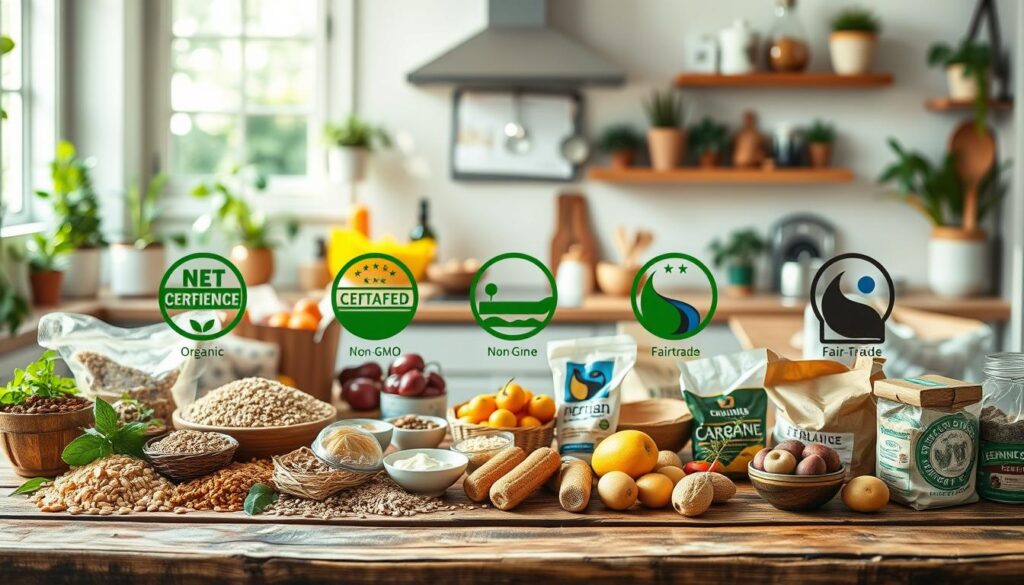
Fair Trade certification is more than just a feel-good label. It means farmers get fair wages. This leads to better crops and more nutrients in your food.
Carbon Neutral is a buzzword. It means companies are trying to reduce their emissions. Food systems are a big part of global greenhouse gases. Choosing sustainable food can cut your carbon footprint in half.
Alternative proteins are key for athletes. They have a big difference in environmental impact. Plant-based proteins need less water and land and produce fewer emissions.
“Non-GMO” labels are mostly marketing. Genetic modification isn’t always bad. Some GMO crops use less pesticides. The real issue is how they’re made.
Certifications often mean better farming practices. Farmers who care about their land grow better food. It’s not just about being eco-friendly; it’s about improving performance.
Don’t aim for perfection. Focus on labels that match your values and goals. Sometimes, the best choice is to eat what’s in season locally.
Your grocery cart is a vote for the food system you want. Make your choices count for your health and the planet’s.
Building a Sustainable Plate (macros, micros, portions)
Think of your dinner plate as a tiny ecosystem. It’s where your performance goals and planet concerns meet. It’s not just about eating; it’s about using resources wisely.
Here’s the math: change from 50% animal protein to a mix of 1/3 less animal, 1/3 plant, and 1/3 sustainable animal. Your muscles get what they need, and your carbon footprint shrinks. Plant-based plates offer more antioxidants and phytochemicals, helping you recover without plastic.
Let’s look at portions from an environmental view. Eating too much isn’t just bad for you; it’s also bad for the planet. The average American eats 3,600 calories a day but only needs 2,500. This excess is wasted energy and resources.
The Sustainable Athlete Plate Formula
| Component | Traditional Athlete Diet | Sustainable Approach | Environmental Impact Reduction |
|---|---|---|---|
| Protein Sources | 70% animal-based | 33% plant proteins | 40-50% lower carbon footprint |
| Carbohydrates | Processed grains | Whole, seasonal foods | 60% less packaging waste |
| Healthy Fats | Import-heavy options | Local sources (nuts, avocados) | 75% reduced food miles |
| Portion Size | Calorie-focused oversized | Nutrient-density focused | 30% less food waste |
Plant-based foods offer a big antioxidant advantage. They’re not just supplements; they’re nature’s way to fix damage from hard training. And they come in biodegradable packaging – actual food.
Creating your athlete diet plate means asking two questions. “Will this fuel my recovery?” and “Did this fuel require burning fossil fuels?” The answers should match. If they don’t, it’s time to change your approach.
Your fork is now a tool for environmental policy. Every bite reflects agricultural practices, transportation costs, and resource use. A sustainable athlete diet isn’t about giving up; it’s about using resources better. Your body and the planet will both benefit, with better performance and lower carbon emissions.
Shopping and Meal-Prep with Less Waste
The average athlete’s kitchen creates a lot of waste. It’s like a sea turtle might rethink its career. We’ve made meal prep all about plastic containers, forgetting that simple foods are often the best.
Start smart shopping before you go to the store. Planning well can cut food waste by 30%. Your grocery list should be thoughtful, not just a list of wants.
Bulk bins are great for eco-friendly nutrition. They cut down on packaging and let you buy just what you need. No more quinoa bags that are half empty.
When you can’t avoid packaging, choose recyclable packaging. Glass jars, metal cans, and cardboard are better than plastic. Your recycling bin and the planet will thank you.
Local farmers markets have great produce with little packaging. Those imperfect carrots are full of nutrients and haven’t traveled far.
Fermented foods like kimchi and sauerkraut are great for the planet. They save seasonal produce, cut down on waste, and are good for your gut. They’re a win-win for athletes looking for eco-friendly nutrition.
Don’t throw away vegetable scraps! Beet greens and carrot tops can be tasty. Even onion skins can flavor your broth. Being creative with “waste” is a smart move.
Choose reusable containers over disposable ones. Glass jars are perfect for bulk goods. Beeswax wraps and stainless steel containers are also good choices. They’re better for your food and the planet.
It’s okay if you’re not perfect. Cutting waste by 20% makes a big difference. We should focus on beating our opponents, not wasting resources.
Your shopping cart shows what you value. Fill it with whole foods, local produce, and bulk items. This choice will help you perform better and protect the planet.
Budget Tips and Time Savers
Let’s debunk a big myth in sustainable sports nutrition: eating green doesn’t have to cost a lot. A plant-based athlete diet can actually save you money and boost your performance.
Buying seasonal produce is not only healthier, but it’s also cheaper. When crops are in season, prices go down. Why spend a lot on strawberries in December when sweet potatoes and kale are cheap?
Legumes and whole grains are a nutritional powerhouse and cost-effective. Lentils offer protein for just $0.03 per gram, while beef costs $0.15. This is not just saving money—it’s smart fueling.
Here’s how to save time and money:
- Batch-cook grains and legumes during your rest days
- Embrace frozen produce—nutritionally identical to fresh, often cheaper
- Buy in bulk from local co-ops or farmers’ markets
- Repurpose leftovers into new meals (yesterday’s roasted veggies become today’s wrap filling)
Time-saving tip: Whole foods need little prep. While others wait for their processed meals, you’re enjoying roasted sweet potatoes and black beans that cooked while you foam-rolled.
Affordable antioxidants are easy to find. Berries might be expensive out of season, but carrots, beets, and spinach are cheaper and just as good. Your immune system won’t notice, but your wallet will.
The best part? Athletes who eat more plants save 20-30% on food while getting more nutrients. This is not just sustainable—it’s smart eating.
Even with a busy schedule, you don’t have to spend a lot on food. Simple prep, smart shopping, and using what’s available can help you eat like a champion without breaking the bank.
Sample 7‑Day Training Menu
Ever wonder how performance nutrition and caring for the planet can go hand in hand? This week-long menu shows you can achieve your best and protect the environment at the same time. Each meal is carefully chosen to meet your training needs while following sustainable sourcing principles.
We’re changing the way we think about protein. Instead of focusing on meat, we’re using a variety of plant proteins and adding animal products wisely. Studies show this approach can cut your carbon footprint by up to 40% compared to traditional diets.
More plant variety means happier gut bacteria. This leads to better recovery and immunity. We’ve also added antioxidant-rich foods around your workouts for extra benefits.
| Day | Breakfast | Lunch | Dinner | Training Fuel |
|---|---|---|---|---|
| Monday | Oats with berries & hemp seeds | Lentil salad with seasonal veggies | Salmon with quinoa & roasted roots | Banana with almond butter |
| Tuesday | Tofu scramble with spinach | Chickpea wrap with avocado | Black bean burgers with sweet potato | Date energy balls |
| Wednesday | Greek yogurt with nuts & honey | Quinoa bowl with roasted vegetables | Chicken stir-fry with brown rice | Orange slices |
| Thursday | Chia pudding with mango | Hummus & vegetable plate | Lentil pasta with marinara | Dark chocolate square |
| Friday | Egg whites with whole grain toast | Tuna salad with mixed greens | Turkey chili with cornbread | Apple with peanut butter |
| Saturday | Smoothie with pea protein | Leftover chili over greens | Plant-based pizza night | Trail mix |
| Sunday | Whole grain pancakes | Roast vegetable medley | Fish tacos with slaw | Yogurt parfait |
Animal proteins play a supporting role in this menu. This is all about sustainable sourcing. We use seasonal produce, focusing on whole foods and reducing waste.
This isn’t about giving up – it’s about being smart with what you eat. You’ll get all the protein and nutrients you need for top performance while cutting your carbon footprint. Your body and the planet will appreciate it.
Common Pitfalls and How to Avoid Them
Ever seen an athlete go so plant-based they practically start photosynthesizing? I have, and the results aren’t pretty. The road to eco-friendly nutrition is paved with good intentions that often lead to spectacular nutritional faceplants.
Research shows alarming RED-S risks when energy intake drops too low. Plant-based diets can create micronutrient black holes if not properly planned. It’s like trying to win the Tour de France on a unicycle – noble effort, terrible execution.
The three most common mistakes I see? Over-reliance on processed meat alternatives (often swimming in excessive recyclable packaging), protein combining that would make a chemistry student weep, and timing that’s more random than a lottery draw.
| Pitfall | Why It Happens | Smart Solution |
|---|---|---|
| Processed Plant Alternatives | Convenience overrides sustainability concerns | Choose bulk legumes over packaged mock meats |
| Protein Timing Issues | Missing the anabolic window post-workout | Plan shakes or meals within 30 minutes of training |
| Micronutrient Gaps | Inadequate variety in plant sources | Rotate dark greens, nuts, seeds weekly |
| Excessive Packaging | Single-serving convenience culture | Buy in bulk using reusable containers |
| Energy Deficiency | Underestimating plant-based calorie density | Track intake with nutrition apps initially |
Vitamin B12 supplementation isn’t optional for vegan athletes – it’s as necessary as water during a marathon. Iron status requires the monitoring intensity of a NASA launch. The data doesn’t lie: these deficiencies can tank performance faster than a flat tire on race day.
Antioxidant supplementation presents its own comedy of errors. More isn’t always better – it’s like bringing a firehose to put out a candle. Whole food sources almost always outperform isolated supplements.
The secret? Work with your biology, not against it. Your eco-friendly nutrition plan should honor both your athletic needs and the planet’s limits. Choose products with minimal recyclable packaging when possible, but don’t sacrifice nutritional quality for sustainability points.
Smart strategies beat good intentions every time. Your performance and the planet will thank you for avoiding these common traps.
Metrics to Track: From VO2 Max to Carbon Footprint
Tracking your carbon footprint might seem less exciting than tracking your VO2 max. But both show how well your engine runs. The same focus that boosts your athletic performance can also reduce your environmental impact. It’s not just about personal records anymore – it’s about making a difference for the planet.
Your body gives you immediate feedback through energy levels and recovery rates. When your sustainable sports nutrition plan works, you feel it. Morning fatigue disappears. Workout recovery speeds up. This shows your personal performance is improving, just like any race time.
Environmental metrics need a bit different tracking but follow the same principle. Think of food miles as your dietary carbon footprint’s pace. Packaging waste is like your sustainability split time. These help measure progress without complex math.
Research shows interesting links between body and environment metrics. Oxidative stress markers show how well your body recovers. Carbon intensity shows your environmental impact. Both systems show signs of strain before it’s too late.
| Metric Category | Personal Performance | Environmental Impact | Tracking Frequency |
|---|---|---|---|
| Energy Indicators | Morning fatigue levels | Food miles per meal | Daily |
| Recovery Metrics | Muscle soreness duration | Packaging waste volume | Weekly |
| Efficiency Measures | Workout output consistency | Carbon intensity per calorie | Monthly |
| Long-term Trends | Seasonal performance peaks | Annual carbon footprint | Quarterly/Annual |
Modern apps make tracking easy. They combine nutritional analysis with environmental impact assessments. You input your meals, and they show both nutritional and carbon data. It’s like having a personal coach and environmental scientist in your pocket.
The ultimate performance metric isn’t just your race time – it’s your legacy. In the fight against climate change, we’re all endurance athletes. Your carbon footprint might not get you a podium finish, but it affects the future of our planet.
Resources and Tools
Think of this as your sustainable sourcing starter pack. It’s like a digital Swiss Army knife for eco-conscious athletes. The Environmental Working Group’s seasonal produce guide is your shopping cheat sheet.
Apps like Oroeco turn carbon tracking into a game you’ll want to play. They make it fun to reduce your carbon footprint.
For your athlete diet, Cronometer helps balance your macros and considers food origins. The Marine Stewardship Council and Fair Trade certifications ensure only the best products make it through. The Sustainable Food Trust provides the research to back up your choices.
Local harvest maps turn grocery runs into treasure hunts for regional producers. Compost guides turn food scraps into garden gold, not landfill regret. These tools make sustainable choices practical, not just about virtue.
The perfect athlete diet is about personal bests and leaving the planet better. Your fork is now the most versatile piece in your gym bag.


