

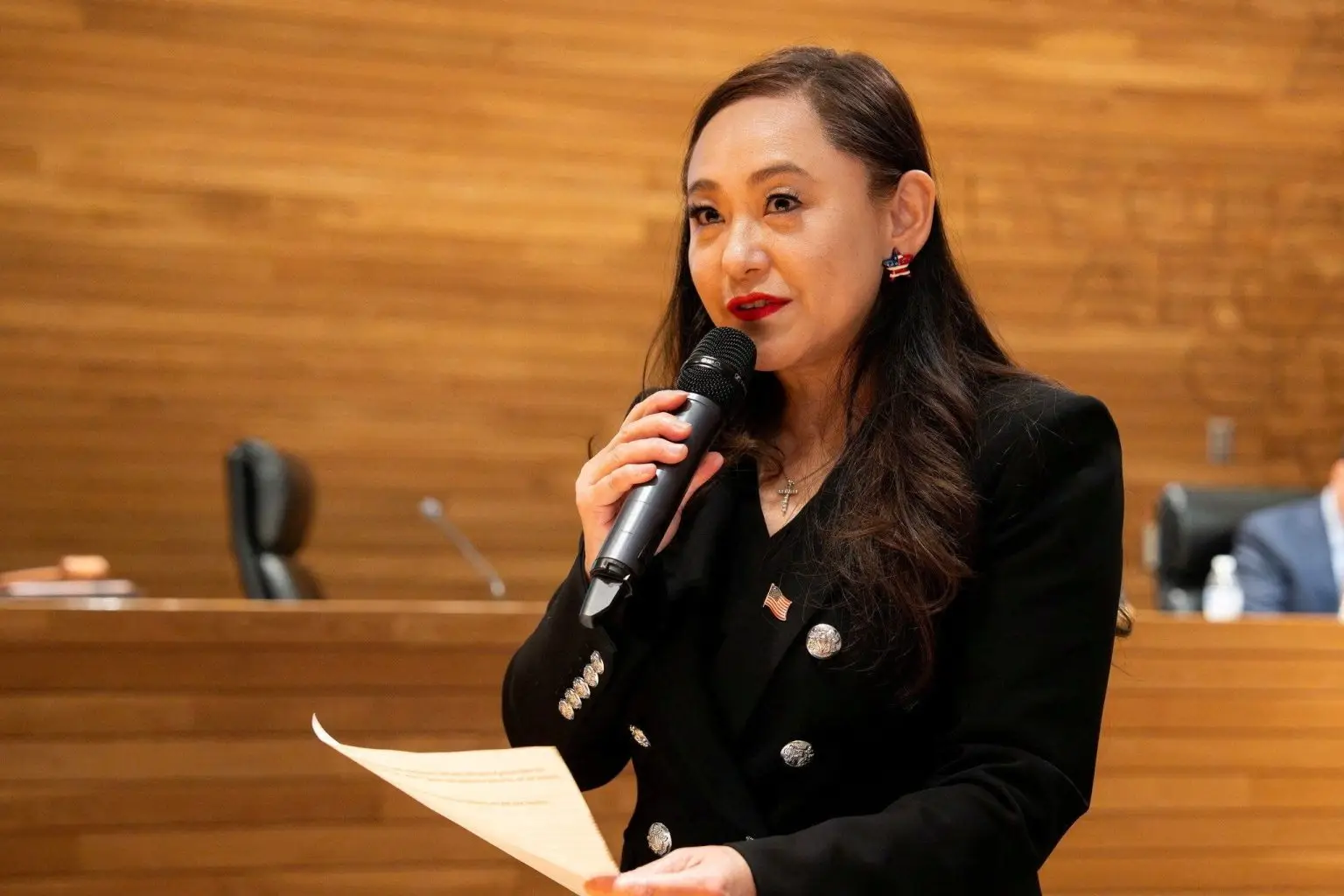
The California mayor China agent case has landed with unusual force because it pulls foreign influence, local government, online propaganda, and public trust into one disturbing story. Eileen Wang’s resignation as mayor of Arcadia after agreeing to plead guilty to acting as an illegal agent of China is not just a legal development; it is a warning about how quietly overseas political operations can try to reach into American civic life.
The case matters because local government is supposed to feel close, practical, and accountable. When a mayor admits to undisclosed activity tied to a foreign government, the damage is not only legal. It is a blow to trust, transparency, and the basic expectation that public officials answer to the communities they serve.
Why The California Mayor China Agent Case Matters
The California mayor China agent case matters because it shows how foreign influence concerns are no longer confined to Washington, intelligence briefings, or national campaigns. They can surface in city councils, community media, local elections, and online spaces aimed at immigrant communities.
Wang, 58, served in Arcadia, a San Gabriel Valley city with a large Asian American population and a politically active civic culture. Federal prosecutors charged her with acting in the United States as an illegal agent of a foreign government, and she agreed to plead guilty to the felony count. The charge carries a maximum possible penalty of 10 years in federal prison.
That does not mean every local political connection is suspicious. It does not mean Chinese American civic participation should be viewed through a lens of suspicion. That distinction is essential. The issue is not ethnicity, language, or immigrant political involvement. The issue is undisclosed direction from a foreign government.
The Justice Department’s public account of the California mayor China agent allegations makes the concern clear: prosecutors say Wang worked with Yaoning “Mike” Sun to promote the interests of the People’s Republic of China through a website that appeared to serve the local Chinese American community. That alleged conduct occurred before and around the period when Wang entered elected office, which is exactly why the case has created such political shock.
What Wang Admitted In The Plea Deal
The plea deal centers on the claim that Wang acted at the direction and control of Chinese government officials without notifying the U.S. attorney general, as required by law. In practical terms, prosecutors say she helped operate U.S. News Center, a website presented as a news source for the local Chinese American community, while posting content influenced by Chinese officials.
Federal filings describe a pattern of communication involving Chinese officials, prepared content, requested edits, and posts on the website. The materials included pro-PRC messaging and content defending Beijing’s position on Xinjiang. Prosecutors also described communications involving John Chen, a figure tied to China’s intelligence apparatus who had previously faced a separate U.S. case.
The legal point is not that a person cannot express pro-China views. People in the United States can hold unpopular or controversial political positions. The charge is about hidden agency. If someone acts under the control of a foreign government in the United States, disclosure rules exist so the public can evaluate the message with proper context.
That is what gives the case its seriousness. A website can look like community media while functioning as a political tool. A local figure can appear to be speaking independently while following outside direction. The gap between appearance and reality is where public credibility begins to erode.
Why The Resignation Was Politically Inevitable
Wang’s resignation was politically inevitable because the office of mayor depends on confidence. Arcadia’s mayoral role is selected through a rotating system among City Council members, but the title still carries civic authority. It represents the city in public ceremonies, regional conversations, and community trust.
Once the plea agreement became public, remaining in office would have placed the city under a cloud. Every council meeting, city statement, and public appearance would have been filtered through the same question: can a person who admitted acting as an illegal agent of a foreign government continue representing the city?
The answer was practically no. The resignation was not merely a personnel change. It was an act of institutional damage control.
Arcadia now has to reassure residents that city operations remain stable, local decisions remain legitimate, and the misconduct described in federal filings does not define the broader community. That is not easy. Political trust is slower to restore than it is to lose.
The Role Of U.S. News Center
The website at the center of the case is one of the most revealing pieces of the story. U.S. News Center allegedly operated as a community-facing news site while posting content aligned with Chinese government interests. That structure matters because influence operations often work best when they do not look like influence operations.
A government press release is easy to identify. A community website is different. It can appear familiar, local, and culturally specific. It can target readers in their own language or within their own social networks. It can blend genuine community information with political messaging, making the influence harder to detect.
This is where media literacy becomes part of national security. Readers need to know who is behind the outlet, what interests it serves, whether it discloses outside direction, and whether content is being shaped by political actors.
The case also shows how digital platforms can blur the line between local journalism, advocacy, propaganda, and foreign influence. That ambiguity is not accidental. It is often the point.
Why Foreign Influence Cases Are Hard To Explain
Foreign influence cases are difficult because the public often hears the word “agent” and immediately thinks of spies, classified documents, or dramatic espionage scenes. The law can be broader than that. Acting as an unregistered agent may involve political messaging, lobbying, community outreach, media activity, or other work directed by a foreign government.
That makes clarity essential. The public needs to understand what Wang is accused of doing and what she is not accused of doing. The case does not require readers to imagine secret handoffs or stolen files. It focuses on undisclosed work carried out under foreign direction.
The legal system treats that as serious because transparency is the safeguard. A person may advocate for a foreign government’s position, but if the advocacy is directed or controlled by that government, disclosure becomes the central requirement.
Without disclosure, voters and readers cannot judge the message properly. They cannot tell whether they are hearing a neighbor’s view, a community outlet’s independent analysis, or a foreign government’s preferred line.
The China Factor In Local Politics
China’s influence activity in the United States has become a recurring national concern, but local cases carry a different weight. Local politics is often less guarded than federal politics. Campaigns may be smaller, oversight may be thinner, and community relationships may matter more than formal institutional scrutiny.
That can create openings. A foreign government does not need to influence national policy directly to gain value. It can shape narratives, elevate friendly voices, discourage criticism, cultivate relationships, and build influence networks that may become useful later.
In a city like Arcadia, community media and local political relationships matter. They can shape turnout, reputation, access, and trust. If a foreign government can quietly influence those spaces, the effect may be subtle but meaningful.
That is why the Arcadia mayor China agent case has broader significance. It turns a local resignation into a larger question about whether American communities have the tools to recognize and resist undisclosed foreign political direction.
Why This Is Not A Story About Chinese Americans
A careful public response must separate the conduct alleged in this case from the broader Chinese American community. That separation is not political correctness. It is basic fairness and civic discipline.
Chinese Americans are not responsible for the actions of a public official who admitted illegal foreign-agent activity. Immigrant communities are often among the first targets of foreign influence efforts precisely because they maintain language, cultural, family, and media ties across borders. Treating the entire community as suspect only helps hostile actors by creating fear and division.
The real lesson is that targeted communities deserve protection, not suspicion. Community members should have access to independent media, transparent political information, and confidence that local leaders are not secretly serving foreign governments.
If the public turns this into a story about ethnicity, it misses the point. The issue is conduct, disclosure, and foreign government direction. Anything broader risks producing harm.
What This Means For California Politics
California politics already operates at the intersection of immigration, global trade, technology, national security, and ethnic diversity. That makes the state especially vulnerable to oversimplified narratives. The Wang case will likely be used by some as proof of broad foreign infiltration and by others as an isolated scandal with no wider meaning. Both readings are incomplete.
The better reading is more measured. The case shows that foreign influence concerns are real, but they must be addressed through law, evidence, and institutional safeguards rather than suspicion by identity.
California also has a deep bench of local officials, state candidates, activists, donors, and community organizations. The state’s political complexity makes oversight both necessary and difficult. Local races can become entry points into broader influence networks because they are often less expensive and less scrutinized than statewide campaigns.
That context matters as California prepares for future leadership contests. Readers following state politics can see how local trust and statewide ambition intersect in California governor debate coverage, where public confidence, policy identity, and political credibility are already central themes. The Arcadia case adds another layer: voters need confidence not only in policy promises, but in the independence of the people making them.
The Legal And Political Breakdown
A concise table helps separate the main parts of the case.
| Issue | What Happened | Why It Matters |
|---|---|---|
| Federal charge | Wang was charged with acting as an illegal agent of a foreign government | Raises national-security and disclosure concerns |
| Plea deal | She agreed to plead guilty to the felony count | Turns allegations into admitted legal responsibility |
| Public office | Wang resigned as Arcadia mayor and from city leadership | Shows the political consequences of the case |
| Media activity | U.S. News Center allegedly posted content directed by PRC officials | Highlights how community media can be used for influence |
| Related figure | Yaoning “Mike” Sun is serving a federal sentence in a related matter | Shows the case was part of a wider network |
| Public impact | Residents must now assess trust in local government | Creates civic and reputational consequences for the city |
The table shows why the case is not one-dimensional. It is legal, political, informational, and civic all at once.
Why Disclosure Laws Matter
Foreign-agent disclosure laws are not designed to ban speech. They are designed to make hidden sponsorship visible. That distinction is crucial.
In a democracy, people can argue for another country’s policies. They can criticize U.S. policy. They can publish controversial opinions. They can defend foreign governments. But if they do so under the direction or control of a foreign government, the public is entitled to know.
That knowledge changes how readers interpret the message. A statement from an independent local writer carries one meaning. A statement shaped by a foreign official carries another. Disclosure allows the audience to make an informed judgment.
The Wang case is therefore not mainly about silencing viewpoints. It is about whether political and media activity was presented honestly. In democratic systems, that honesty is part of accountability.
The Risk To Local Trust
Local government depends heavily on personal trust. Residents often know council members, attend community events, meet officials at schools or civic gatherings, and expect city leaders to focus on streets, parks, safety, housing, budgets, and local services.
A foreign-agent guilty plea deal disrupts that relationship. It makes residents wonder what else they do not know. It may also make them question whether campaign relationships, community organizations, or local media outlets were influenced in ways that were not disclosed.
That kind of doubt can spread faster than facts. Once confidence is damaged, even ordinary city decisions may be viewed suspiciously. That is why Arcadia’s next steps matter. The city must communicate clearly, maintain continuity, and avoid any appearance of minimizing the seriousness of the plea.
Restoring confidence requires more than saying operations continue. It requires showing that local institutions are stronger than one official’s misconduct.
What Investigators Will Likely Focus On Next
The public case already names Wang, Sun, the website, and communications with Chinese officials. The wider investigative question is whether there were additional participants, funding streams, community organizations, digital networks, or political relationships that require scrutiny.
Investigators may also examine how influence moved through local media ecosystems. Who wrote content? Who approved it? Who distributed it? Who knew about the source of direction? Were readers misled? Were political campaigns affected?
These questions are not about guilt by association. They are about evidence. Investigations must distinguish between people who knowingly acted under foreign direction and people who were merely connected to the same community or platform.
The risk in cases like this is overreach. The public should demand rigorous investigation, but also precision. Broad suspicion can damage innocent people and weaken the moral authority of the case.
The Role Of Online Propaganda
Online propaganda does not always look dramatic. It may appear as ordinary news, commentary, cultural content, or community updates. It can be posted on small websites, shared through messaging apps, and circulated among readers who trust familiar language or community ties.
That is why digital influence is so difficult to detect. The platform may not be large, but the audience may be strategically valuable. A message aimed at a specific community can shape perceptions, reduce criticism of a foreign government, encourage political alignment, or isolate dissenting voices.
In this case, prosecutors described content that promoted PRC interests and defended Beijing’s position on Xinjiang. The broader concern is not only one article or one website. It is the method: officials allegedly provided or shaped messaging, and local-facing channels amplified it without disclosure.
The lesson is transparency. Community outlets should be clear about ownership, funding, editorial control, and outside influence. Readers should ask where information comes from and who benefits when certain messages are repeated.
How Local Campaigns Can Become Vulnerable
Local campaigns are often built on small teams, volunteers, donors, ethnic networks, community organizations, and personal relationships. That intimacy can be a strength. It can also create vulnerability if campaigns do not have strong compliance habits.
A campaign treasurer, adviser, community connector, or media ally can wield significant influence in a local race. If that person is connected to foreign-directed activity, the campaign may face questions even when the candidate’s official platform is local.
The Wang case is especially sensitive because Sun, who worked with Wang, was connected to her political activity and later received a prison sentence in a related foreign-agent case. That overlap raises questions about how political relationships are vetted and how quickly warning signs are recognized.
Local campaigns need stronger safeguards. That means cleaner documentation, donor screening, conflict checks, transparency around outside help, and a willingness to ask uncomfortable questions before they become legal emergencies.
What Voters Should Take From The Case
Voters should not become cynical about every public official. Cynicism can be as damaging as naivety. The better response is informed vigilance.
Ask who funds local candidates. Ask which organizations endorse them. Ask how community media covers them. Ask whether campaign staff and advisers are transparent. Ask whether officials respond clearly when conflicts arise. These are ordinary democratic questions, not conspiracy thinking.
Voters should also protect pluralism. Foreign influence concerns should not be used as a weapon against immigrant participation. The answer to covert influence is more open civic engagement, not less.
The most important public habit is scrutiny. Not suspicion of identity, but scrutiny of conduct. That is how communities protect both security and inclusion.
Why This Story Will Travel Beyond Arcadia
The Arcadia case will not stay local because it touches national anxieties about China, elections, social media, diaspora politics, and public integrity. It also arrives at a time when U.S.–China tensions are already high across trade, technology, security, and diplomacy.
That timing will amplify the story. Some political figures will use it to argue for tougher counterintelligence enforcement. Others will warn against stigmatizing Asian American communities. Both concerns are real.
The challenge is to hold both truths at once. Foreign influence operations should be investigated aggressively. Communities targeted by those operations should not be collectively blamed.
That balance requires leadership. Officials must speak precisely. Media outlets must avoid inflammatory shortcuts. Community leaders must be supported when they call for transparency. Law enforcement must show evidence rather than rely on broad insinuation.
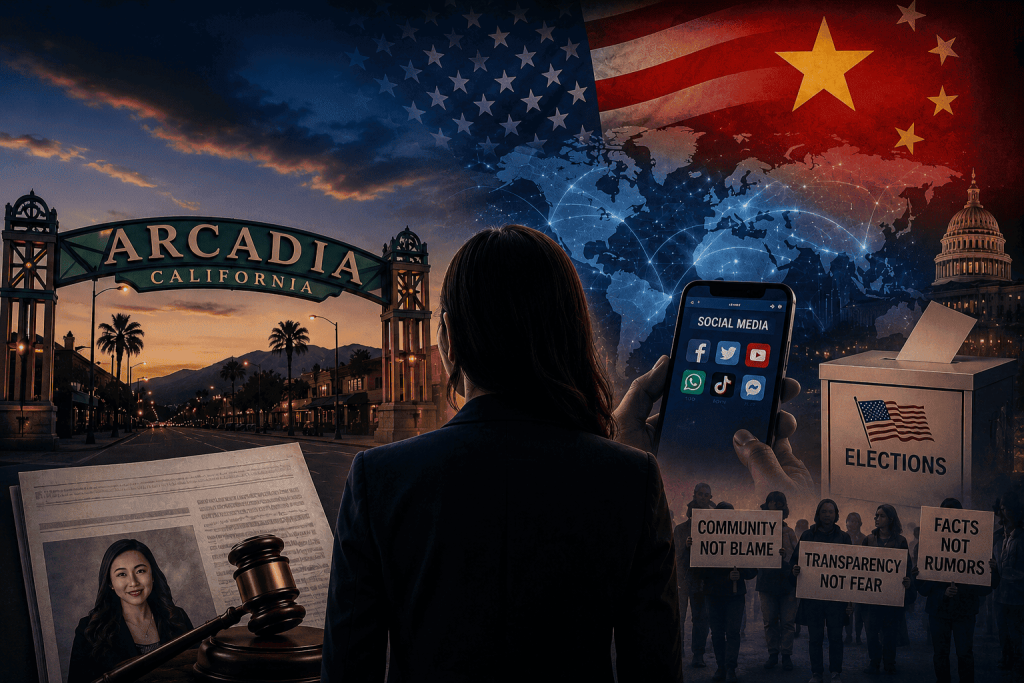
How Arcadia Can Rebuild After The Resignation
Arcadia’s immediate priority is continuity. Residents need to know who is leading the city, how council responsibilities will be handled, and whether city operations remain unaffected. Clear local communication can reduce rumor.
The second priority is review. The city should examine whether any municipal processes, public communications, or council activities were affected by Wang’s undisclosed conduct. If the case did not involve city resources, officials should say that clearly and explain how they know.
The third priority is public engagement. Residents deserve a forum to ask questions without turning the moment into a spectacle. A calm, structured response can help keep the city from being defined by the scandal.
Rebuilding trust takes time. The city should resist the temptation to treat resignation as the final step. It is the beginning of repair.
What This Means For National Security
National security is often imagined at the level of aircraft carriers, cyberattacks, intelligence agencies, and diplomatic summits. The Wang case shows a quieter layer: influence within communities, media channels, and local politics.
That quieter layer can matter because democracies depend on trust in information and institutions. If foreign governments can covertly influence public messaging, they do not need to win elections directly to shape civic behavior. They can soften criticism, amplify preferred narratives, and create divisions.
That is why counterintelligence work now extends into media literacy, campaign compliance, community trust, and public disclosure. The goal should not be paranoia. It should be resilience.
A resilient community can identify foreign-directed activity without turning against itself. It can protect democratic institutions while protecting innocent residents from backlash.
The Forward View On The California Mayor China Agent Case
The California mayor China agent case matters now because it forces a difficult but necessary conversation about foreign influence where many Americans least expect it: local civic life. Wang’s resignation and plea deal show that undisclosed foreign direction can move through community media, political relationships, and trusted local identities.
The case should lead to stronger safeguards, not broader suspicion. Cities should improve transparency rules. Campaigns should tighten compliance. Community outlets should disclose control and funding clearly. Law enforcement should pursue evidence carefully. Voters should demand openness without allowing fear to become prejudice.
The deeper lesson is democracy. Public office depends on the idea that leaders serve their constituents, not a hidden foreign sponsor. Local media depends on the idea that readers know who is shaping the message. Campaigns depend on the idea that voters can evaluate candidates honestly.
Arcadia now has to repair its civic confidence, and California has to absorb the warning without overreacting. The California mayor China agent case is explosive because it is not only about one resignation. It is about integrity, security, and whether American local politics can remain open while defending itself from covert foreign influence.


