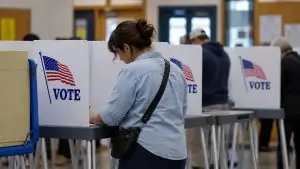
Thousands of college students in New Hampshire are preparing to vote in the November 3 midterm elections, but a Supreme Court decision has changed which identification they can use. The New Hampshire student ID voting ban 2026 means students cannot rely on school-issued identification cards to establish their identity at the polls, even as a backup.
The October 22 ruling arrives less than two weeks before Election Day, creating an immediate challenge for students who may have assumed their campus IDs would be sufficient.
The dispute also raises a broader election question: How can states strengthen identity verification without creating unnecessary obstacles for eligible voters?
New Hampshire Student ID Voting Ban 2026: What the Supreme Court Decided
On October 22, the U.S. Supreme Court allowed New Hampshire to enforce restrictions preventing students from using school-issued identification cards to establish their identities during the November election.
The decision followed a legal challenge to House Bill 323, legislation signed by Republican Governor Kelly Ayotte in April 2026.
The law removed student identification cards from the state’s list of expressly accepted voter IDs.
However, the controversy extended beyond that change.
New Hampshire Secretary of State David Scanlan issued guidance preventing election officials from considering student IDs even as supporting evidence when verifying someone’s identity.
A federal district judge blocked that additional restriction in early October, concluding that the guidance went further than the law itself.
The Supreme Court subsequently intervened, allowing the restriction to operate during the midterms.
According to the Supreme Court’s October 22 order, lower federal courts generally should avoid changing election procedures immediately before voting.
Justice Ketanji Brown Jackson dissented, questioning whether the lower court had actually changed election rules rather than corrected misleading guidance.
The ruling is temporary, not a final judgment on whether the underlying restrictions are constitutional.
Which IDs Can New Hampshire Students Use on November 3?
The immediate concern for students is practical: arriving at a polling location with identification that election officials cannot accept.
New Hampshire recognizes several government-issued documents for voter identification.
The following table explains the options and restrictions.
| Identification document | Accepted for voting? | Important detail |
|---|---|---|
| State driver’s license | Yes | Licenses from other states qualify |
| State-issued non-driver ID | Yes | Must come from an authorized motor vehicle agency |
| U.S. passport or passport card | Yes | Federal identification is accepted |
| U.S. military identification | Yes | Qualifying armed services ID is accepted |
| New Hampshire voting-only photo ID | Yes | Available free through the state |
| College or university student ID | No | Cannot be relied upon to establish identity |
| High school student ID | No | Subject to the same student ID restriction |
Qualifying photo identification generally remains acceptable for five years after expiration. Special expiration rules apply to voters aged 65 and older.
Students without government-issued identification should not automatically assume they cannot vote.
New Hampshire has procedures allowing election officials to verify identity through personal knowledge or other qualifying evidence. However, students should not rely on their school IDs as part of those procedures under the Supreme Court’s October 22 order.
The state’s official election-day identification guidance explains accepted documents and the process for obtaining a free voting-only photo ID. Because some published state guidance still references the earlier October 2 court order, voters should confirm the latest instructions directly with their local election officials.
A student ID alone is insufficient, making advance preparation particularly important.
Why the Restrictions Have Sparked a Voting Rights Dispute
Supporters of the legislation argue that government-issued identification provides more consistent verification standards than cards distributed by educational institutions.
Republican lawmakers backing the restrictions maintain that stronger identification requirements can improve public confidence in election integrity.
State Representative Donald McFarlane, who sponsored the legislation, has argued that colleges do not necessarily follow the same identification safeguards as government agencies.
Opponents dispute whether that distinction justifies excluding student identification.
Voting rights advocates argue that younger voters may be more likely to depend on campus-issued documents, especially when attending college away from their permanent homes.
The Coalition for Open Democracy challenged the restrictions, raising constitutional concerns about burdens on younger voters.
The disagreement centers on whether the rules impose reasonable verification requirements or disproportionately affect eligible students.
Neither the Supreme Court’s emergency order nor the underlying dispute establishes that student identification has caused widespread voter fraud.
Election security and voter access remain separate considerations that courts must evaluate under applicable constitutional standards.
Why the Timing Matters for the 2026 Midterms
The ruling comes during the final stretch of a closely watched election season.
New Hampshire voters will choose a U.S. senator on November 3, and the contest could influence the balance of power in Washington.
Although the identification restrictions apply statewide, college communities face particular uncertainty because students may have received conflicting information about acceptable documents.
The timing also creates challenges for election administrators.
Officials must communicate the applicable requirements, prepare polling workers and answer questions from voters who may have followed earlier guidance.
Similar concerns about voter eligibility and election procedures have emerged elsewhere.
The US Report recently examined California’s voter eligibility dispute, where federal prosecutions and a separate voter-registration lawsuit have intensified debate over election safeguards.
The legal circumstances differ, but both controversies demonstrate how verification disputes can become politically significant immediately before voting.
For New Hampshire, clear instructions before Election Day may prove more consequential than the political arguments surrounding the ruling.
The Final Days Before Voting Will Test Election Preparation
Students who intend to vote should confirm their registration status, identify their assigned polling location and review the identification they plan to bring.
Those without an accepted document should contact their town or city clerk promptly to discuss available verification procedures and obtaining a free voting-only ID.
Students registering on Election Day face additional requirements because New Hampshire requires proof of eligibility, including identity, age, citizenship and domicile.
Being eligible to vote does not eliminate those documentation requirements.
Meanwhile, the underlying litigation remains unresolved.
The Supreme Court’s emergency intervention allows the state’s restrictions to operate while further legal proceedings continue.
Election officials, universities and voting rights organizations therefore face an immediate communication challenge.
The central uncertainty is not simply whether students support or oppose the identification requirement. It is whether every eligible voter understands the applicable rules before reaching the ballot box.
November 3 Will Reveal the Practical Impact of the Ban
The New Hampshire student ID voting ban 2026 has moved from a courtroom dispute to an immediate test of election administration.
Its practical consequences will depend partly on how many students lack alternative identification and whether local officials can resolve verification problems without preventing eligible voters from participating.
The Supreme Court has settled which restrictions can operate for the upcoming election, but it has not delivered a final resolution of the constitutional challenge.
As November 3 approaches, the most pressing concern is preventing confusion from becoming an unnecessary barrier to voting.
For students, checking identification requirements now could make the difference between a straightforward voting experience and a difficult Election Day.