

The Portugal World Cup exit was not a slow collapse. It came in one cold, surgical moment, when Mikel Merino’s stoppage-time goal turned a tense Iberian knockout match into a national heartbreak for Portuguese fans.
Spain’s 1-0 win in the Round of 16 did more than eliminate a rival. It ended the emotional arc that had built around Cristiano Ronaldo, Roberto Martínez, and the uneasy question of whether Portugal could turn individual history into one last collective run, a pressure already visible in Portugal’s World Cup doubts.
The Final Whistle Hit Portugal Fans Before The Stadium Went Quiet
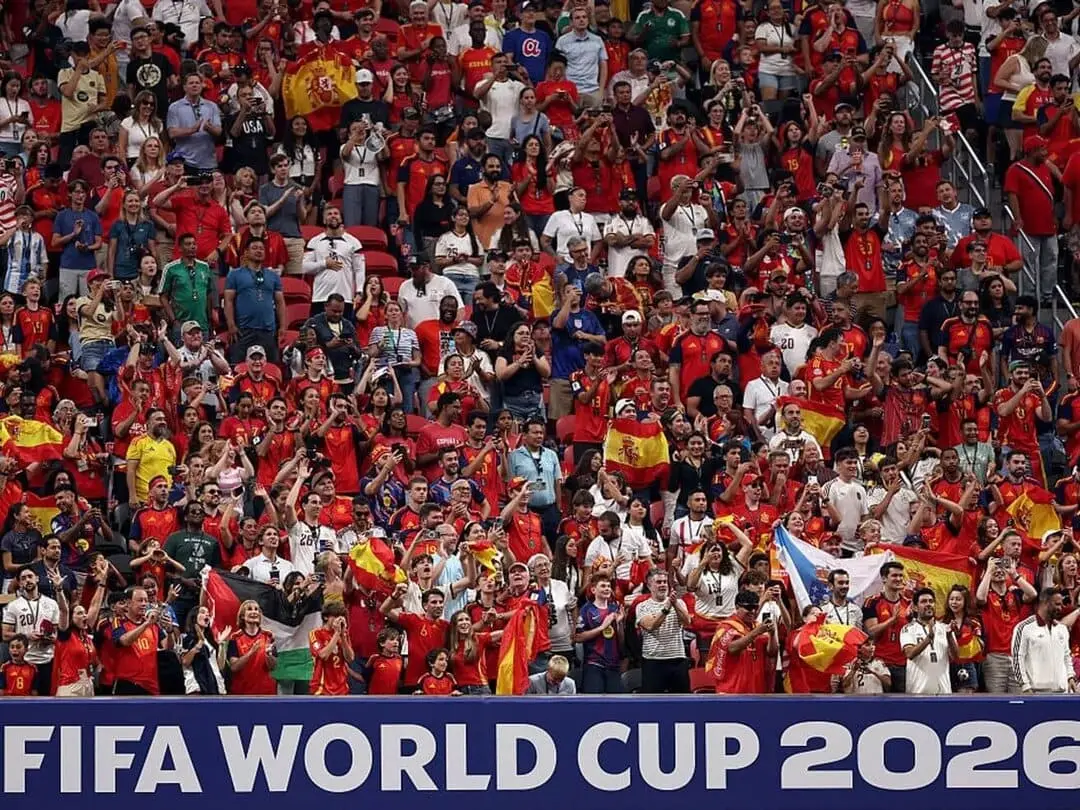
The pain in the stands told the story before the analysis could begin. Portugal supporters had arrived expecting tension, rivalry, and perhaps another dramatic escape, but the final minutes turned belief into disbelief. The emotional reaction was not only about losing to Spain. It was about watching a World Cup dream disappear almost without warning.
For many fans, the match carried more weight because Portugal still looked alive deep into the second half. There was no early collapse, no obvious surrender, and no long period where the result felt settled. That made the ending feel sharper. Hope stayed close enough to touch until the moment it was taken away.
The cameras found the familiar images of knockout heartbreak: scarves covering faces, supporters staring blankly at the pitch, and families sitting in silence while Spain celebrated nearby. Those scenes often become the lasting memory of a tournament exit because they show what the scoreboard cannot fully explain.
Portugal’s defeat also reopened a larger emotional question about timing. Great teams often need one final action, one defensive stand, or one clean chance to keep a tournament alive. Against Spain, Portugal reached that edge and slipped, leaving its fans with the cruel feeling that the dream ended not over 90 minutes, but in one decisive moment.
Portugal World Cup Exit Turned One Late Goal Into A National Reckoning
Portugal did not lose because it was overwhelmed from the opening whistle. That may be what makes the defeat harder to absorb.
For long stretches, the match stayed narrow, tactical, and uncomfortable. Portugal had enough defensive organization to frustrate Spain, enough attacking names to suggest one moment could arrive, and enough tournament experience to believe extra time was within reach.
Then Merino changed everything.
The midfielder scored in the 90+1 minute at Dallas Stadium, giving Spain a 1-0 win and a quarter-final place, as recorded in the match report and highlights. For Portugal, the timing was devastating because there was almost no room left for correction.
That is the cruelest part of knockout football. A team can survive pressure, manage the clock, and appear close to another chance. Then one lapse rewrites the entire tournament.
Spain Won By Trusting Control Over Chaos
Spain’s victory was not a performance built on constant fireworks. It was built on patience, territory, and the belief that possession pressure would eventually force Portugal to defend one action too many.
That approach can look dull until it works.
Spain had threatened earlier through players such as Mikel Oyarzabal and Lamine Yamal, but the match resisted easy control. Portugal’s defensive shape kept the game within reach, while Diogo Costa and the back line prevented Spain from turning pressure into an early breakthrough.
The winner still reflected Spain’s identity. Ferran Torres helped create the decisive opening, Merino arrived with composure, and Spain finished the kind of sequence that separates contenders from stylish teams that cannot end matches.
The result gave La Roja something more valuable than a dramatic clip. It gave them proof of knockout patience, the ability to win when fluency fades and the opponent refuses to break quickly.
Ronaldo’s Ending Made The Defeat Feel Larger
The scoreboard says Portugal lost 1-0. The emotional weight says something heavier happened.
Ronaldo, at 41, has carried Portugal’s World Cup story across generations. His 2026 campaign already included history, pressure, criticism, and flashes of defiance. That is why this loss immediately felt like more than one country leaving one tournament.
A late defeat against Spain would have hurt Portugal under any circumstances. With Ronaldo walking off after what is widely expected to be his final World Cup appearance, the image became a symbol of an era closing without the trophy that always escaped him.
The late winner details also showed how little separated survival from elimination. Bernardo Silva nearly equalized in stoppage time, but Portugal could not recover the moment Spain had stolen.
That is why fans’ tears were not just about defeat. They were about an ending without rescue.
The Decisive Details Behind The Knockout
The match can be understood through a few pressure points rather than a long list of statistics. Spain did not need a rout. Portugal did not need to be poor for the exit to feel brutal.
| Match Signal | What Happened | Why It Mattered |
|---|---|---|
| Scoreline | Spain beat Portugal 1-0 | A single goal decided the Round of 16 tie |
| Decisive moment | Mikel Merino scored in stoppage time | Portugal had almost no time to respond |
| Venue | Dallas Stadium | The match became one of the tournament’s biggest knockout scenes |
| Spain’s reward | Quarter-final place | La Roja stayed alive in the title race |
| Portugal’s cost | Elimination | Ronaldo’s World Cup story likely ended |
The table shows why the reaction was so sharp. Nothing about the result gave Portugal fans the comfort of inevitability.
A 3-0 defeat can be explained as a gap in quality. A last-minute 1-0 loss leaves supporters replaying every clearance, substitution, missed chance, and half-step of defensive positioning.
That is the kind of defeat that lingers.
Portugal’s Bigger Problem Was Not Just The Goal
Portugal’s exit should not be reduced to one defensive failure. The late goal decided the match, but the larger issue was that Portugal never fully seized control of its own story.
The team had talent across the pitch. Bruno Fernandes, Bernardo Silva, João Félix, Rafael Leão, Nuno Mendes, Vitinha, and Ronaldo gave Martínez more attacking pedigree than most nations can imagine. Yet the tournament often felt like a search for rhythm rather than a march built on conviction.
That matters because elite knockout teams need more than names. They need repeatable patterns, clear roles, and enough flexibility to solve a match when the first plan stalls.
Portugal had moments. Spain had the final answer.
The loss will now sharpen difficult questions. Was Portugal too cautious? Did the attack become too dependent on emotional gravity around Ronaldo? Did Martínez find the right balance between experience and speed? Did the midfield do enough to change the match before Spain’s substitutes did?
Those questions will not disappear because the defeat was narrow. A narrow loss often makes the inquest even harder because small margins expose large decisions.
Spain’s Next Test Will Show What This Win Is Worth
Spain now carries momentum, but also a warning. Beating Portugal with a late goal creates belief, yet it also shows how thin the margin can become when knockout opponents slow the match down.
The next signal is whether Spain can turn control into earlier danger. A team that waits until stoppage time may be admired for composure one night and punished for wastefulness the next.
For Portugal, the next signal is more painful. The federation must decide whether this tournament was the end of a cycle or simply the failure of a highly talented group to become ruthless at the right time. Ronaldo’s shadow will remain part of that conversation, but the harder question belongs to the players still in their prime.
This Portugal World Cup exit matters because it closed one dream and exposed another. Spain left with a place in the quarter-finals; Portugal left with tears, regret, and the uncomfortable knowledge that a generation’s last great chance may have vanished in one Spanish touch.


