

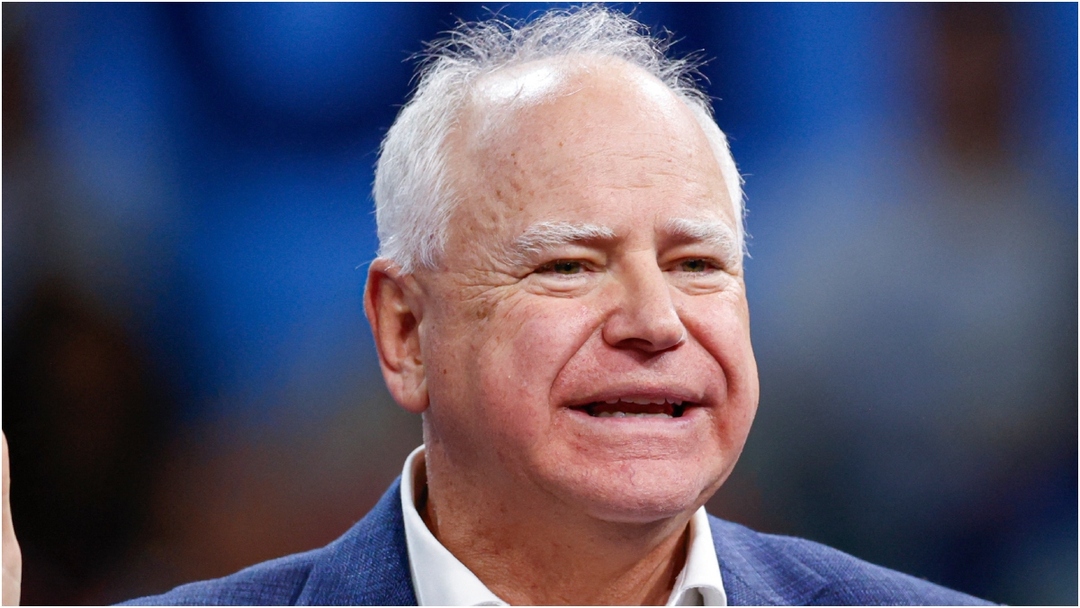
By Lydia Crestwood Political Strategist & Staff Writer, The US Report Date: January 25, 2026
When we talk about law enforcement operating on American soil without the strictures of the U.S. Constitution, the conversation usually turns to international bodies. Legal scholars have long debated the reach of Interpol—the International Criminal Police Organization. Because Interpol is an international organization and not a U.S. agency, it operates under its own “Constitution” and administrative rules, which don’t perfectly align with our Fourth Amendment protections. It is a loophole that rightfully worries civil libertarians: a policing body that technically doesn’t have to answer to our supreme law.
But while we worry about international overreach, we are ignoring a far more flagrant constitutional crisis happening right here in the Midwest. If you want to see a government official who believes they are not limited by the U.S. Constitution, look no further than Minnesota Governor Tim Walz.
The “Supreme” Law of the Land? Not in St. Paul.
The Supremacy Clause of the U.S. Constitution (Article VI, Clause 2) is not a suggestion. It states clearly that federal law is the “supreme Law of the Land.” It means that when the federal government exercises its enumerated powers—like enforcing immigration borders—states cannot simply decide to opt out because they don’t like the politics.
Governor Walz, however, seems to believe he has found a line-item veto for the Constitution.
In recent weeks, as federal immigration enforcement has ramped up operations to detain criminal aliens, Walz has not just refused to cooperate—he has actively rhetorically delegitimized federal officers. We aren’t talking about a disagreement on policy nuances; we are talking about a sitting Governor characterizing federal law enforcement as an illegitimate occupying force.
“Modern-Day Gestapo”
The rhetoric coming out of the Governor’s mansion has been shocking, even for this polarized era. Walz has publicly smeared Immigration and Customs Enforcement (ICE) officers—men and women sworn to uphold federal law—as a “threat” to public safety. He has gone as far as to label them a “modern-day Gestapo,” a comparison that is not only historically repulsive but legally dangerous.
When a Governor tells his constituents that federal officers are “reckless” and that the federal government is “waging war” against them, he is doing more than just political grandstanding. He is effectively instructing his state apparatus to treat federal law enforcement as a hostile foreign entity.
This is where the “not limited by the Constitution” parallel to Interpol becomes terrifyingly real.
The Breakdown of Order
By refusing to honor ICE detainers—requests to hold individuals who have been arrested for crimes and are in the country illegally—Walz is nullifying federal authority. His administration is releasing individuals with criminal records back into Minnesota communities rather than turning them over to federal jurisdiction.
He justifies this by claiming he is protecting his state. But protection from what? From the enforcement of laws passed by the United States Congress?
If Interpol operating without Fourth Amendment constraints is a concern, then a Governor operating without Supremacy Clause constraints should be a national emergency. We have a system where a state executive is treating the Department of Homeland Security not as a partner, but as an enemy combatant.
Governor Walz may not like the current administration’s immigration policies. He has every right to challenge them in court. But he does not have the right to declare federal police “illegal” by fiat. We are a nation of laws, or we are not. And right now, Minnesota is looking less like a state in the Union and more like a rogue province making up the rules as it goes.
Watch this video to see Governor Walz’s inflammatory comments on federal immigration enforcement:
This video is relevant because it directly documents Governor Walz using the specific “war” rhetoric referenced in the article, confirming his adversarial stance toward federal law enforcement.


