

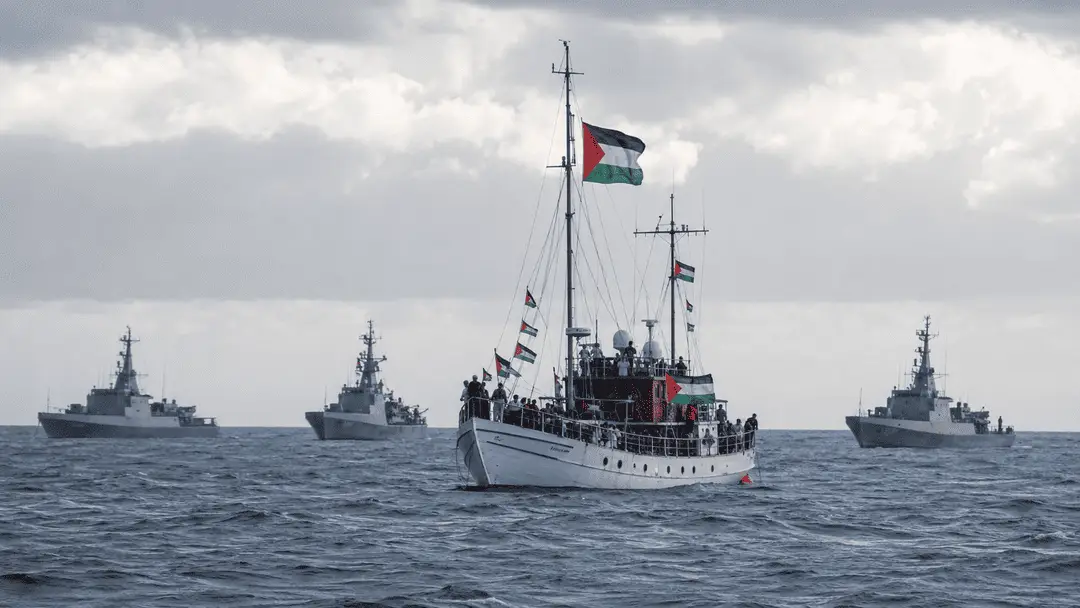
The deportation of Gaza flotilla activists has turned a maritime interception into a broader test of Israel’s diplomacy, humanitarian messaging, and treatment of foreign nationals. What began as another attempt to challenge the blockade of Gaza is now drawing attention because the aftermath may prove more politically damaging than the interception itself.
The Flotilla Story Is No Longer Only About The Boats
Israel says it has deported hundreds of foreign activists who were detained after trying to breach its naval blockade of Gaza. The flotilla, associated with the Global Sumud effort, sought to draw attention to conditions in Gaza and to challenge restrictions that Israel says are necessary to prevent Hamas from receiving weapons.
The basic facts are already significant. Israeli forces intercepted the remaining vessels, detained roughly 430 people, and later said all foreign activists had been deported. One Israeli participant faced separate legal proceedings. For readers trying to follow the sequence, AP’s account of the Gaza flotilla deportations captures the core timeline and the official Israeli response.
But the reason this story has escalated is not only the maritime action. It is the way the detainees were shown, described, and politically used after they were taken into custody. That shift moved the story from blockade enforcement into a diplomatic pressure test, with allied governments forced to respond to images and allegations that were difficult to ignore.
Gaza Flotilla Activists Became A Symbol Of A Larger Humanitarian Fight
The phrase Gaza flotilla activists now carries more weight than the immediate group of detainees. It has become shorthand for a larger argument over humanitarian access, protest tactics, Israeli security claims, and the limits of international patience.
Israel frames these flotillas as provocations that do little to materially improve aid delivery while helping Hamas politically. Flotilla organizers frame them as civil action against a blockade they see as unjust and harmful to civilians. Both arguments are familiar, but this episode sharpened the conflict because the number of foreign participants, the public handling of detainees, and the international reaction all converged at once.
That matters because symbolic aid missions can still create real diplomatic consequences. A flotilla does not need to carry large quantities of supplies to influence the narrative. Its purpose is often visibility, not logistics. In that sense, Israel’s decision to stop the vessels may have been predictable, but the political cost became harder to manage once the detainee treatment became central to the story.
The Backlash Shows How Quickly Optics Can Become Policy Pressure
The video released by National Security Minister Itamar Ben-Gvir intensified the controversy because it appeared to show detained activists in humiliating conditions. Several governments objected, Israeli Prime Minister Benjamin Netanyahu publicly rebuked Ben-Gvir’s conduct, and diplomatic complaints spread across Europe and beyond. Reuters detailed the diplomatic backlash as countries condemned both the treatment of activists and the political messaging around it.
This is the pressure point Israel now faces. Security arguments may explain interception, but they do not automatically settle questions about custody, dignity, due process, or proportionality. A government can defend a blockade and still face criticism over the treatment of detainees after enforcement.
The broader risk is reputational. When foreign nationals are involved, domestic political theater rarely stays domestic. Families, embassies, courts, rights groups, and foreign ministries enter the frame. That is why a video intended to project toughness can quickly become evidence in a diplomatic dispute.
| Pressure Point | Why It Matters | Signal To Monitor |
|---|---|---|
| Deportation process | Determines whether governments view the case as resolved or mishandled | Further consular complaints or legal filings |
| Detainee treatment | Shapes international reaction beyond the blockade debate | Investigations, testimony, or official apologies |
| Humanitarian access | Keeps Gaza conditions at the center of the dispute | New aid restrictions, corridors, or policy adjustments |
| Israeli domestic politics | Turns enforcement into a campaign-stage issue | More ministerial videos, speeches, or coalition pressure |
| Allied government response | Shows whether criticism becomes concrete action | Summons, sanctions, travel bans, or parliamentary inquiries |
The table shows why this is not a one-day controversy. The deportations may close the immediate custody issue, but the next phase depends on whether governments treat the episode as a regrettable incident or as part of a wider pattern.
The Legal And Moral Argument Is Still Unsettled
The naval blockade sits at the center of the dispute. Israel says it is meant to prevent weapons from reaching Hamas. Critics argue the blockade imposes collective hardship on Palestinians in Gaza and restricts humanitarian life far beyond security needs. Those two positions have shaped years of argument, and this flotilla has pushed them back into public view.
The legal questions are complex, especially when interceptions occur far from Gaza’s shoreline and involve foreign civilians. The moral questions are more immediate for many observers: Were the activists treated safely? Were they given proper consular access? Was the public humiliation of detainees acceptable? Did the handling of the episode help Israel’s security case or undermine it?
There is also a strategic question for humanitarian advocates. Flotillas generate attention, but they also risk confrontation, detention, and political exploitation by the very authorities they are challenging. The trade-off is not simple. For organizers, symbolic aid still matters because it forces visibility. For governments, symbolic missions can be dismissed as stunts while still creating diplomatic damage.
The International Reaction Could Outlast The Deportations
The most immediate development to monitor is whether the backlash remains rhetorical or becomes operational. Diplomatic summons are significant, but they are often the first step rather than the last. The stronger test would be whether countries pursue legal review, sanctions, entry bans, formal inquiries, or coordinated pressure on Israel’s handling of future flotillas.
This also sits within a larger global debate over humanitarian assistance and political conditionality. The same readers following Middle East diplomacy are often watching global aid funding controversies, because decisions about aid, access, and accountability increasingly shape how governments are judged during crises.
For Israel, the challenge is that the blockade argument does not exist in isolation. It now competes with images of detainees, angry allied governments, and accusations from activists who say they were mistreated. For the activists, the challenge is maintaining focus on Gaza’s civilian hardship without letting the story become only about their own detention.
The next signal will be whether future flotilla attempts grow, shrink, or change tactics. If organizers see this episode as proof that the world is paying attention, more attempts could follow. If governments become more active before vessels sail, diplomatic intervention may replace confrontation at sea.
The deportation of Gaza flotilla activists may remove hundreds of people from Israeli custody, but it does not remove the questions their detention raised. The issue now is whether Israel can defend its security policy while reducing diplomatic fallout, and whether humanitarian campaigners can convert visibility into sustained pressure rather than another cycle of interception, outrage, and release.


