

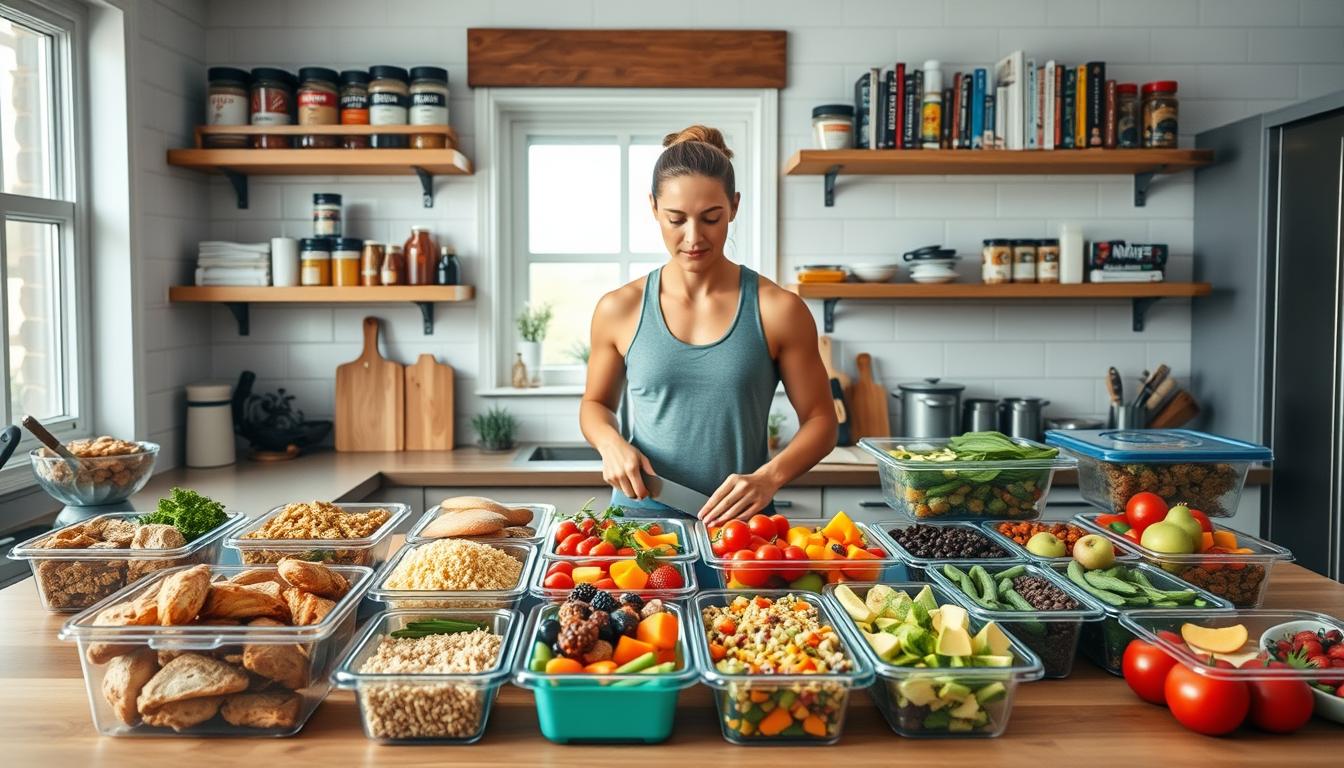
Let’s be honest: treating your nutrition like a one-size-fits-all political platform is a losing strategy. Your body’s fuel demands aren’t generic talking points. They’re as specific as your sport’s playbook.
This is where nutrient timing enters the game. Think of it as applied biochemistry, not diet dogma. It means synchronizing your intake of carbs, protein, and fats with your body’s key windows of physiological demand.
An endurance runner loading glycogen stores has a completely different nutritional blueprint than a strength athlete focused on protein synthesis for muscle growth. Your sport dictates your numbers.
So before we engineer your weekly athlete meal prep revolution, we need this constitutional convention. Knowing whether you’re fueling a marathon or a max lift determines everything. Consider this your foundational briefing for efficient meal prep for athletes.
Macro Ranges (g/kg) & Calorie Bands: Your Body’s Economic Policy
Forget about political polls. What really matters is your macro ranges and calorie bands. This is where theory meets the spreadsheet, turning abstract goals into a real plan for meal prep for athletes.
Your body is like a performance economy. Is it a Tour de France stage or a powerlifting meet prep? The way you use protein, carbs, and fats changes a lot. Endurance athletes need carbs, while strength athletes focus on protein.
Think of nutrient timing as a key to better endurance. It can boost performance by up to 21%. It’s not magic. It’s about giving your body the right fuel at the right time.
So, what are the practical exchange rates? Here’s a simplified look at strategic macro ranges:
- Protein: The non-negotiable currency. Ranges from 1.6g/kg for maintenance to 2.2g/kg+ for aggressive muscle building or dieting.
- Carbohydrates: Your energy policy. Can swing from 3g/kg on a rest day to 8g/kg+ for extreme endurance loads.
- Fats: The essential reserve. Typically held steady between 0.8g/kg and 1.2g/kg to support hormone function.
Your calorie band is like a national budget. A small deficit (200-500 calories) saves money. A maintenance band keeps things balanced. A surplus (300-500 calories) invests in growth. By mapping your g/kg targets onto these calorie bands, you make smart choices. This is not guesswork. It’s data-driven governance for your body.
90-Minute Weekend Workflow
Sunday afternoon is often spent watching Netflix or feeling stuck. But for those who want to perform at their best, it’s a chance to plan. You’re ready to succeed, but time is against you. The 90-minute weekend workflow is your quick fix for kitchen mess.
This isn’t just about cooking. It’s a mission that requires precision, like a special ops team. We focus on nutrient timing, making it key to our plan. Maximize performance by treating fuel strategy as a critical component of your prep.
It’s like a productivity hack that benefits you all week. In the fight against poor recovery and fast food, being efficient is your strongest weapon. This workflow turns your goals into real, repeatable wins.
Shop list, prep steps, storage map
Think of your kitchen as a battlefield, and this section as your tactical operations manual. Every successful meal prep for athletes campaign needs good logistics. Without it, you’re left hungry and confused.
The shopping list is your intelligence briefing. It should be specific and focused. It’s not just about grabbing healthy foods. It’s about getting exactly what you need for your performance.
There’s a big difference between amateur and professional meal prep. Amateurs wander the aisles, while professionals have a precise list. This list is the key to your personalized 24-hour fueling plan.
Let’s break down the three core components of athlete meal prep logistics:
The Intelligence Briefing: Your Shopping List
Your shopping list should be detailed and organized. Group items by category to make shopping easier. This helps you stay focused and avoid impulse buys.
Organize your list by the store’s layout. Start with produce, then proteins, and end with pantry items. This strategy helps you avoid temptation and stay on track.
The Ordered Timeline: Your Prep Steps
Once you have your list, it’s time to start. The prep steps are your ordered timeline. This is where most people waste time.
Professional meal prep for athletes uses concurrent operations. Chop vegetables while grains cook. Roast proteins while assembling snacks. It’s like cooking in parallel.
Start with the longest tasks first. Preheat the oven while washing and chopping vegetables. Cook grains and legumes while proteins roast. This creates a smooth kitchen flow.
The Masterstroke: Your Storage Map
The storage map is the heart of efficient athlete nutrition. It’s like a GPS for your fridge and freezer. Without it, finding your meals is a nightmare.
This isn’t just about putting food in containers. It’s about creating a system that makes finding meals easy. Designate zones for different meals. Breakfasts on the left, lunches in the middle, dinners on the right.
The freezer needs careful planning. Use the “first in, first out” principle. Label everything with contents and date. This helps during busy training weeks.
| Storage Zone | Meal Type | Container Color | Best By Timeline | Grab-and-Go Ready |
|---|---|---|---|---|
| Fridge Top Shelf | Prepped Breakfasts | Blue Lids | 3-4 days | Yes (reheat optional) |
| Fridge Middle Shelf | Lunch Entrees | Green Lids | 4-5 days | Yes (portable) |
| Fridge Bottom Shelf | Dinner Components | Red Lids | 5-6 days | No (assembly required) |
| Freezer Door | Emergency Backups | Yellow Lids | 2-3 months | Yes (thaw overnight) |
| Freezer Main Chamber | Batch Proteins/Grains | Clear Containers | 3-4 months | No (component only) |
This system makes finding meals easy. Blue lids mean breakfast. Green means lunch. You don’t need to read labels at 5 AM.
The storage map turns your fridge into a command center. It’s what makes meal prep for athletes sustainable.
Implement these three components together, and you’ve got a closed-loop system. Intelligence informs execution, which flows into organization. Each failure point is eliminated.
Your kitchen becomes a system management center. It’s not just about cooking. It’s about delivering food when your body needs it most.
Batch Recipes & Swaps
Welcome to your kitchen’s creative studio. It’s not just about cooking a lot—it’s about making delicious politics. We’re creating a collection of high-protein recipes made for big batches. Think of it as your favorite songs all in one place.
Do you remember those nutrition tips for workouts? Like the pre-workout oatmeal with banana and protein? Or the post-workout mix of protein and carbs? We’re turning that science into batch cooking hits that grow well. Your breakfasts, main dishes, and sides are now your go-to favorites.
This is also about making smart swaps in your kitchen. Need sweet potatoes? Squash is a great substitute that keeps your meal balanced. These culinary workarounds make sure your diet stays on track, no matter what.
We’re building a menu that’s both flexible and reliable. Your high-protein recipes will adjust easily. The best batch cooking plan is one that’s smart and flexible, based on what you have in your pantry.
3 breakfasts, 3 mains, 2 sides, plant-based options
Flavor fatigue is a big problem for athletes trying to keep their meal prep consistent. Even with perfect macros, eating the same chicken and broccoli over and over can be tough. We need a menu that’s exciting, like a new TV show.
We have a simple plan: offer three different breakfasts, three main dishes, and two sides. This isn’t just food; it’s a system to help you stick to your plan.
Breakfast Rotation: Beyond the Egg White Prison
Breakfast should be exciting, not boring. We need dishes that fuel you well and taste great.
- Savory Oatmeal Bomb: Steel-cut oats cooked in broth, with spinach and a soft-boiled egg or tempeh. It’s filling and tasty.
- Protein-Packed Chia Pudding: A great make-ahead option. Chia seeds soaked in almond milk, with protein powder and cinnamon. Top with berries and almonds. It’s cool and satisfying.
- Breakfast Scramble Muffins: Perfect for on-the-go. Eggs or chickpea flour, with peppers, onions, and turkey sausage or black beans. Bake in a muffin tin. Reheat for 30 seconds. It’s perfect.
The Main Event: Your Protein Power Trio
These dishes are your go-to’s. Each has a unique flavor and protein source, making your meal prep for athletes meaningful.
Choosing your main dish is like picking the right tool for the job. Here’s how they compare.
| Main Dish | Protein Source & Style | Best For Days | Key Flavor Note |
|---|---|---|---|
| Herb-Roasted Chicken Thighs | Animal-based, slow-roasted for tenderness. | High-intensity training, post-workout. | Juicy, savory, with rosemary & lemon. |
| Turmeric Lentil & Chickpea Stew | Plant-based, hearty and legume-driven. | Recovery, lower-impact, or rest days. | Earthy, warming, anti-inflammatory. |
| Ginger-Sesame Turkey Meatballs | Animal-based (lean), quick-baked. | Moderate activity, versatile lunch option. | Asian-inspired, slightly sweet & savory. |
Sidekick Stars: The Versatile Duo
Sides are important. They add fiber, nutrients, and texture.
- Quinoa & Roasted Vegetable Medley: A complete protein base itself. Toss bell peppers, zucchini, and red onion in olive oil and roast. Mix with cooked quinoa. It’s a colorful, nutrient-dense bed for any main.
- Garlic-Roasted Sweet Potato & Broccoli: The classic, perfected. Cubed sweet potatoes and broccoli florets roasted with minced garlic until caramelized. Offers complex carbs and fibrous greens in one easy pan.
Plant-Based Options: No Compromise Required
Inclusivity is key. Our plant-based options are just as satisfying as their meaty counterparts.
For the Savory Oatmeal, use vegetable broth and top with pan-fried tempeh crumbles. The Turmeric Lentil Stew is already a plant-based star. For the meatballs, a mix of chickpeas, oats, and vital wheat gluten gives a meaty texture. The sides are naturally plant-based.
This variety is the heart of your nutrition plan. It makes meal prep for athletes flexible and sustainable. You’re not just feeding your body; you’re engaging your mind.
Portioning & Macros
Let’s talk about the math. You know, the part everyone wants to skip—like reading the terms of service before clicking “I agree.”
But this is where the real magic happens. Precise portioning is what transforms a simple container of food into a targeted recovery tool. It’s the difference between just eating and engineering a result.
Think of it as your body’s transaction system. The science is clear: consuming protein within 30–60 minutes post-workout supports faster muscle protein synthesis. This “anabolic window” isn’t just bro-science; it’s your biological justification for getting the portions right.
Hit your macro targets consistently, and you’re capitalizing on that window. Miss them, and you’re leaving gains on the table.
So, we’re going to break it down. This isn’t about obsessive weighing. It’s about understanding the portion-to-performance exchange rate. We’ll show you how to use your macro targets to calculate exactly what goes into each container.
Consider this your brief but essential tutorial. The fine print you actually need to read.
Label templates, quick math hacks
The key to successful meal prep for athletes is easy organization. It’s not just about stacking containers. It’s about creating a system that understands your body’s needs.
Label templates are essential. They’re not just for dates on food. They bring clarity to your kitchen. Think of them as your personal nutrition guide.
Here’s a simple way to organize your fridge:
- Container: Beef Chili
- Date: 10/26
- P: 35g, C: 40g, F: 15g
This format makes your fridge easy to navigate. No need for complicated labels. It saves time and helps you reach your goals.
Quick math is also important. It helps you estimate portions without a scale. These tips prevent you from getting stuck in analysis.
Your fist can help you measure food. A fist-sized portion of rice is about 35 grams of carbs. Your palm can guide you for a 4-6 ounce protein serving. A cupped hand is good for veggies or complex carbs.
These tips are not exact science. But they’re perfect for everyday life. They help you balance tracking with intuitive eating.
Here’s a quick guide for your gym bag and kitchen:
- Deck of cards ≈ 3-4 oz cooked chicken breast (~25g protein)
- Tennis ball ≈ ½ cup cooked quinoa or oats (~20g carbs)
- Thumb tip ≈ 1 tablespoon oil or nut butter (~14g fat)
This approach makes meal prep for athletes easier. Labels give you control, and quick math gives you freedom. Together, they help you maintain a system all year.
Your fueling plan should be simple. It should be as easy as reading labels and knowing basic measurements. This way, you build a lasting practice, not just a temporary solution. The wise person keeps things simple.
Food Safety & Freshness
Think of your body’s energy system as a finely tuned engine. Proper fuel keeps it humming. But spoiled or poorly stored food is like putting sand in the gas tank. It destroys energy availability and can leave you with depleted glycogen stores at the worst possible moment.
Food safety isn’t about old-fashioned fear. It’s about managing risks, like the cybersecurity of your gut. One rogue bacterium can ruin a week of great kitchen work. Your time and nutrition investment needs protection.
Smart freezer meals give you a strategic edge. They keep food fresh at its best quality. But it’s not just about freezing; it’s about how you freeze, thaw, and reheat to keep nutrients.
Also, match your circadian rhythm. Eating old food is bad. Eating it at the wrong biological time is a double failure. Properly stored freezer meals ensure you get the performance you planned for, exactly when you need it.
Chill times, reheating, freezer cheat sheet
Getting the right food storage is key for athletes. You’ve got the recipes and macros down. Now, it’s time to keep your food fresh.
Your fridge is like a time machine for food. Every degree and hour counts. It’s not just about avoiding sickness. It’s about keeping your food’s nutrients intact.
Cooked chicken has a limited time in your fridge. For the best quality and safety in your meal prep for athletes routine:
- Cooked poultry & lean meats: 3-4 days max. After that, they start to lose quality.
- Cooked grains & legumes: 5-6 days. They last longer because they’re drier.
- Steamed vegetables: 4-5 days. Blanching them first keeps them fresh.
- Hard-boiled eggs: 7 days. But peel them just before eating.
Keeping your fridge at 40°F is a must. It should feel cool, not just a bit chilly.
The Reheating Renaissance: Oven vs. Microwave Science
Reheating is a big challenge for athletes. The microwave is quick, but the oven is better. Why?
Microwaves make food steamy, which can make it tough and soggy. They’re like fast food for reheating.
Ovens use heat that spreads evenly. This keeps food’s texture and nutrients better. It’s the slow-cooked way for athletes.
Pro tip: Add a bit of broth or water to grains and meats before reheating. It adds moisture without steaming them.
Freezer Cheat Sheet: Your Long-Term Asset Portfolio
Your freezer is a strategic storage place. Different foods last longer in the freezer.
| Food Item | Optimal Freezer Time | Quality Notes |
|---|---|---|
| Cooked chicken breast | 2-3 months | Best sliced before freezing; thaw in fridge overnight |
| Lentil or bean soups | 4-6 months | Freezes exceptionally well; texture improves upon reheating |
| Cooked brown rice/quinoa | 3-4 months | Portion into servings; reheat with extra liquid |
| Vegetable chili/stews | 4-5 months | Acidic tomatoes preserve well; flavors meld over time |
| Marinated proteins | 2-3 months | Freeze in marinade for flavor infusion during thaw |
Label everything with dates. Your future self will appreciate it during tough training weeks. Use containers that don’t let air in—oxygen harms frozen food.
Knowing these tips makes meal prep for athletes easy. Proper chilling, reheating, and freezing keep your food great. Your kitchen becomes a place for performance, not just cooking.
Mastering these skills turns your kitchen into a lab. It’s not just about food. It’s about winning.
Sustainable Prep
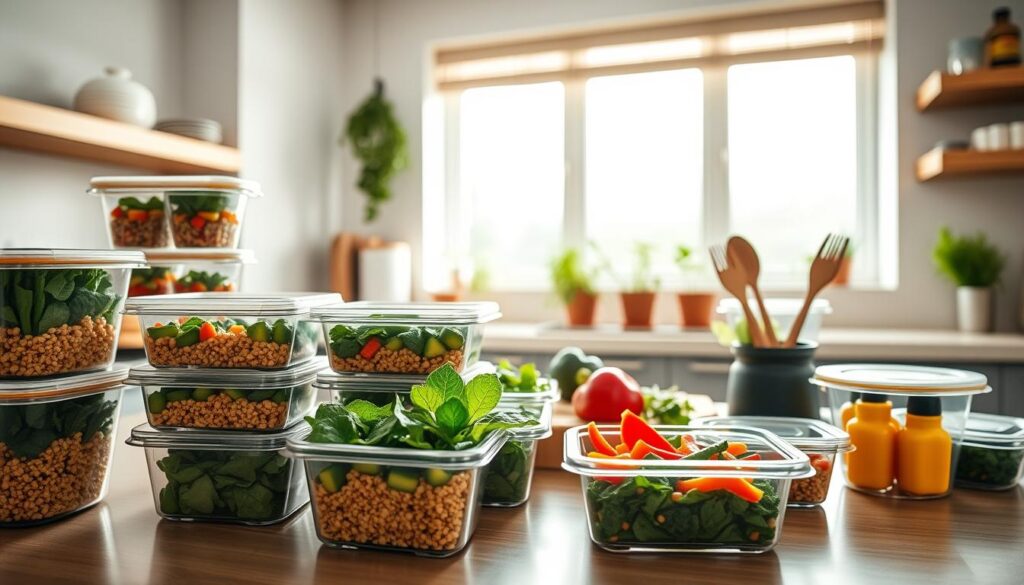
Let’s step back from the daily rush. The real challenge isn’t just Sunday’s prep—it’s keeping it up for six months.
Sustainable prep isn’t just about being green. It’s about making your life easier. Think about the long-term benefits, not just today.
Choosing the right gear is key. You want sustainable containers that last. Ones that don’t break or have weird lid issues. Good quality means less hassle.
It’s also about where you shop. Look for low-waste packaging and choose seasonal produce. This way, you’re good for the planet and your health.
You’re building a routine that’s good for you and the planet. Clean food fuels your body; a clean process fuels your life. That’s the smart, long-term way to live.
Reusables, low-waste packaging, seasonal produce
Let’s talk about the unsung heroes of sustainable meal prep for athletes: the containers that survive the culinary equivalent of a triathlon. You know the drill—freezer to microwave to dishwasher, on repeat. Most containers crack under pressure, both literally and metaphorically.
Glass containers with locking lids? They’re the heavyweight champions. Brands like Pyrex and IKEA’s 365+ series handle temperature swings like pros. Their silicone seals create an airtight lock that keeps your grilled chicken from tasting like last night’s chili.
Stainless steel tiffins work beautifully for cold items. They won’t go in the microwave, but they’re perfect for salads, overnight oats, or post-workout snacks. Think of them as the reliable backup quarterback of your container lineup.
Now, let’s address the plastic elephant in the room. Yes, some BPA-free plastics can handle the gauntlet. Look for polypropylene (PP #5) containers. They’re lighter than glass, which matters when you’re hauling a week’s worth of food to the gym.
The grocery store becomes a different game when you’re minimizing waste. Those plastic coffin wraps around vegetables? They’re the enemy. Here’s my strategy: hit the bulk bins first. Rice, quinoa, oats, nuts—they all live there, plastic-free.
For produce, I play a game I call “naked vegetable bingo.” Can I find broccoli without plastic? Zucchini loose? Bell peppers sold individually? It’s surprisingly satisfying. When plastic is unavoidable, I opt for the recyclable clamshells over the non-recyclable films.
Butcher counters and deli sections are your allies. You can get meats and cheeses wrapped in paper instead of plastic. Bring your own containers if your store allows it—more are adopting this policy every year.
Seasonal produce isn’t just a farmer’s market flex. It’s a financial and flavor hack for meal prep for athletes. Strawberries in December taste like disappointment and cost like luxury. Strawberries in June? They’re sweet, cheap, and packed with nutrients at their peak.
Here’s why this matters for athletes: produce harvested in season has higher vitamin and mineral content. That spinach you’re blending into your post-workout smoothie? If it’s in season, it’s giving you more iron and magnesium per bite.
The cost savings are real. When zucchini is in season, I’ve seen it drop to 99 cents per pound versus $2.99 out of season. Scale that across your weekly vegetable intake, and you’re saving serious money on your meal prep for athletes budget.
Seasonal eating also forces creative variety into your routine. You won’t get bored eating the same three vegetables when your options change every few months. Summer means tomatoes and corn. Fall brings squash and apples. Winter offers citrus and kale.
This is the applied philosophy of sustainable meal prep. Every container choice, every grocery bag, every produce selection is a small vote for a better system. It’s not about being perfect—it’s about being mindful.
The plastic wrap you skip today won’t save the planet alone. But combined with glass containers that last years and seasonal vegetables that taste better? You’re building a meal prep for athletes system that’s efficient, economical, and ethical.
Your food will taste fresher. Your kitchen will generate less waste. And you’ll feel that subtle satisfaction of aligning your athletic discipline with environmental consciousness. That’s what I call a win-win-win for any serious athlete’s meal prep strategy.
Cost Per Serving Table
Let’s talk about money in the kitchen, not the Federal Reserve. Personalized nutrition is more than just food—it’s about saving money. Eating well shouldn’t cost like a millionaire.
We’re going to clear up how much top-notch food costs. Data is your best ally here. Transparency empowers smarter choices, making shopping less stressful.
Here’s a detailed look at the cost of fueling elite performance. It’s like a financial report for your body. Saving money means saving your body, too. We aim for top performance that’s affordable for both your body and wallet.
Budget vs premium builds
Whether you’re a college athlete or a CEO, meal prep scales to fit. The grocery store shows your budget, not your dreams. Let’s look at two plans.
The budget plan is smart. It uses frozen broccoli, bulk brown rice, and chicken thighs. Canned beans are a protein powerhouse. It’s all about smart swaps without losing macros.
The premium plan is like a luxury service. It includes organic kale, wild-caught salmon, and quinoa. Avocado oil and grass-fed beef are also key. It’s for those who see food as top-notch fuel.
But here’s the thing: both plans work. The difference is in cost, convenience, and where you shop. Yet, the prep, portions, and planning are the same.
| Category | Budget Build | Premium Build | Macro Difference | Weekly Cost Impact* |
|---|---|---|---|---|
| Protein Source | Chicken thighs, canned tuna, bulk lentils | Wild-caught salmon, grass-fed steak, organic tofu | Negligible (±5g fat) | Save $18-25 |
| Carbohydrates | Bulk brown rice, regular oats, standard potatoes | Organic quinoa, heirloom rice, sweet potato variety pack | Identical | Save $10-15 |
| Vegetables | Frozen mixed veggies, standard spinach, carrots | Organic kale, fresh asparagus, microgreens | Identical (vitamin density varies) | Save $12-20 |
| Fats/Oils | Standard olive oil, natural peanut butter | Avocado oil, almond butter, chia seeds | Negligible (±2g sat fat) | Save $8-12 |
| Specialty Items | Basic spices, store-brand sauces | Fermented foods, collagen peptides, matcha | Minor micronutrient boost | Save $15-30 |
*Estimates based on average U.S. grocery prices for a single athlete’s weekly prep. The budget build is cheaper, but the macros are almost the same. Premium ingredients offer a bit more nutrition, but not much.
This flexibility is key. A parent can use the budget plan with frozen veggies and bulk chicken. A busy person can upgrade to organic produce and wild-caught fish for convenience. A senior athlete might mix both for the best of both worlds.
The system is adaptable. Your meal prep for athletes doesn’t need to be expensive. It needs a plan. The budget plan shows that performance nutrition is accessible. The premium plan shows where to splurge if you want.
Think of it like cars: both the sedan and the luxury SUV get you to the gym. One has nicer seats and better sound. But the main job—getting you there—is the same. It’s the same with fueling your body.
Ready to create your own plan? Our complete meal prep guide works for any budget. What you put in the container matters more than the container itself. Consistency is key.
7-Day Menu & Reheat Planner
This is your nutritional guide for the week. It helps you avoid endless choices at the fridge.
We’re now putting theory into action. This planner makes your meal planning easy and effective.
It’s like a plan for your metabolism. All your food choices are made for you, so you can focus on your workouts.
The 7-day menu is set up with your workouts in mind. It’s not just about what you eat, but when you eat it.
This guide turns your fridge into a fueling powerhouse. Your body gets what it needs, and you don’t have to ask for it.
You’ll see how meal timing fits into your day and goals on one page. It makes top-notch nutrition simple and easy.
Training vs rest-day tweaks
If you eat the same on leg day as on Netflix day, you’re missing the point. Your body changes with each workout. The key to great meal prep for athletes is adjusting to these changes.
Think of it as being nutritionally agile. Monday’s heavy squat needs different fuel than Thursday’s easy day. Your fridge should show this, not ignore it.
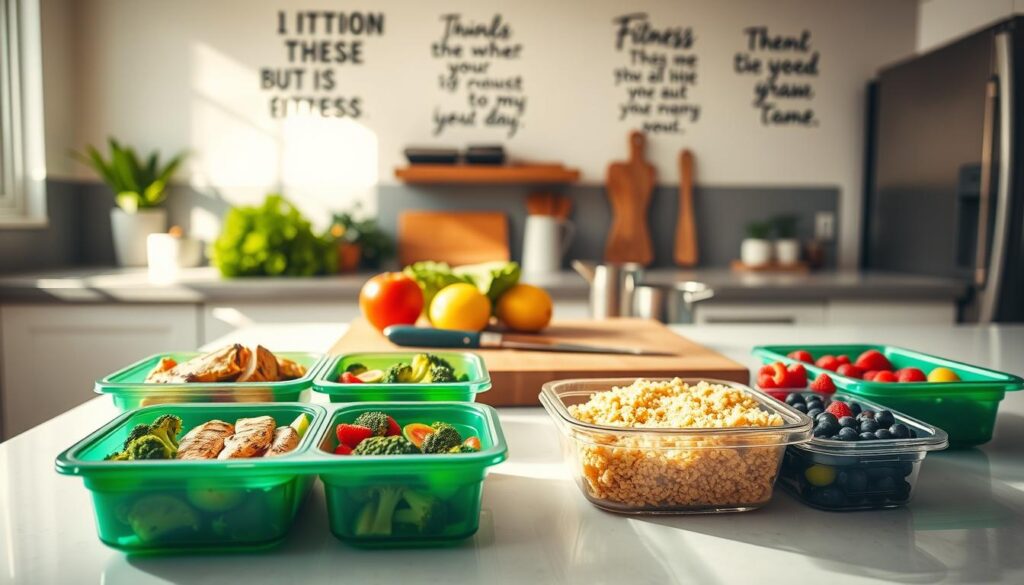
Your metabolism changes with the day. Morning workouts mean you’re working on an empty stomach. Eat more carbs at breakfast and lunch to fill up.
Evening workouts change the game. You’ve fueled up all day. Now, focus on keeping energy steady for your 6 PM workout.
Muscle Gain: The Anabolic Window
For muscle growth, the post-workout window is real. Your muscles need nutrients right away. This is where meal prep for athletes gets precise.
Add 20-30 grams of fast carbs to your post-workout meal. Rice, potatoes, or bananas are good choices. Pair them with protein for muscle repair.
Fat Loss: Fasted or Fed?
The debate on fasted training has many sides. For fat loss in the morning, eat lightly or not at all.
Your body uses fat more easily. Eat more carbs later in the day. Your dinner should be your main meal, not breakfast.
| Meal Component | Training Day Adjustment | Rest Day Adjustment | Physiological Rationale |
|---|---|---|---|
| Complex Carbohydrates | +1 serving post-training | -0.5 to -1 serving | Replenishes glycogen stores depleted during exercise |
| Healthy Fats | Maintain standard portions | Reduce by 15-20% | Lower energy expenditure requires less dense fuel sources |
| Protein | Maintain or slightly increase | Maintain baseline levels | Supports muscle repair regardless of activity level |
| Meal Timing | Cluster carbs around training | Evenly distribute throughout day | Matches fuel delivery to energy demand peaks |
| Hydration Focus | Electrolyte emphasis post-training | General hydration maintenance | Replaces minerals lost through sweat versus basic cellular function |
The table above is a guide, not a rule. Adjust carb intake based on your workout. A light day? Don’t cut carbs as much as a tough day.
Label your containers with “T” for training and “R” for rest days. Or use colored lids. This makes meal prep easier during busy times.
This approach to meal prep for athletes is flexible. It adapts to your body’s needs, not a fixed plan.
It turns meal prep into a dynamic tool, not just a meal service. It’s the difference between feeding a machine and fueling an athlete.
Troubleshooting
Let’s face it: even the best nutrition planning can hit a snag. The third week of chicken and broccoli can get old fast. Your taste buds might even rebel.
Life can throw curveballs like double training days or shift work. Or maybe that hormonal fog just won’t lift. These things can mess up your perfectly calibrated meal plan.
This isn’t about avoiding failure. That’s not realistic. It’s your backup plan when your food preparation goes wrong. We’re tackling common issues like flavor boredom and travel weeks that disrupt your kitchen.
It’s like a system recovery for your athletic diet. Whether you’re tired all the time or just can’t stand another sweet potato, we’ve got solutions. From spice blends to no-cook meals and mental resets, we help you get back on track. It’s not about being perfect; it’s about being resilient.
Boredom, travel weeks, appetite dips
Culinary boredom can kill your meal prep for athletes. You might find yourself looking at the same chicken and rice over and over. The answer isn’t just more recipes. It’s about changing things up.
Keep a few go-to sauces like a chimichurri from Trader Joe’s, a gochujang glaze, and a simple lemon-tahini. Try different cooking methods each week. Bake, air-fry, or pan-sear to mix up the texture. This keeps your taste buds excited.
Travel weeks can be tough on your meal prep. You need to be flexible. Create a shelf-stable kit with almond butter packets, Epic bars, and protein shakes like Orgain. Even in a hotel room, you can make do with what you have.
Use the iron to “grill” a tortilla. The coffee maker can steam veggies. It’s not fancy, but it keeps you fueled when you’re away from home.
Appetite dips can be a problem too. It might be from overtraining, stress, or just a mental pause. Forcing food isn’t the answer. Instead, opt for calorie-rich, easy-to-eat foods.
Blend oats, peanut butter, and a banana for a shake. Add avocado or olive oil to your meals. The goal is to get the nutrients you need, not to finish every last bite.
Overcoming boredom, travel challenges, and appetite dips is key. It turns meal prep into a lifelong habit. The real victory is in the consistency it builds, not just the food itself.


