

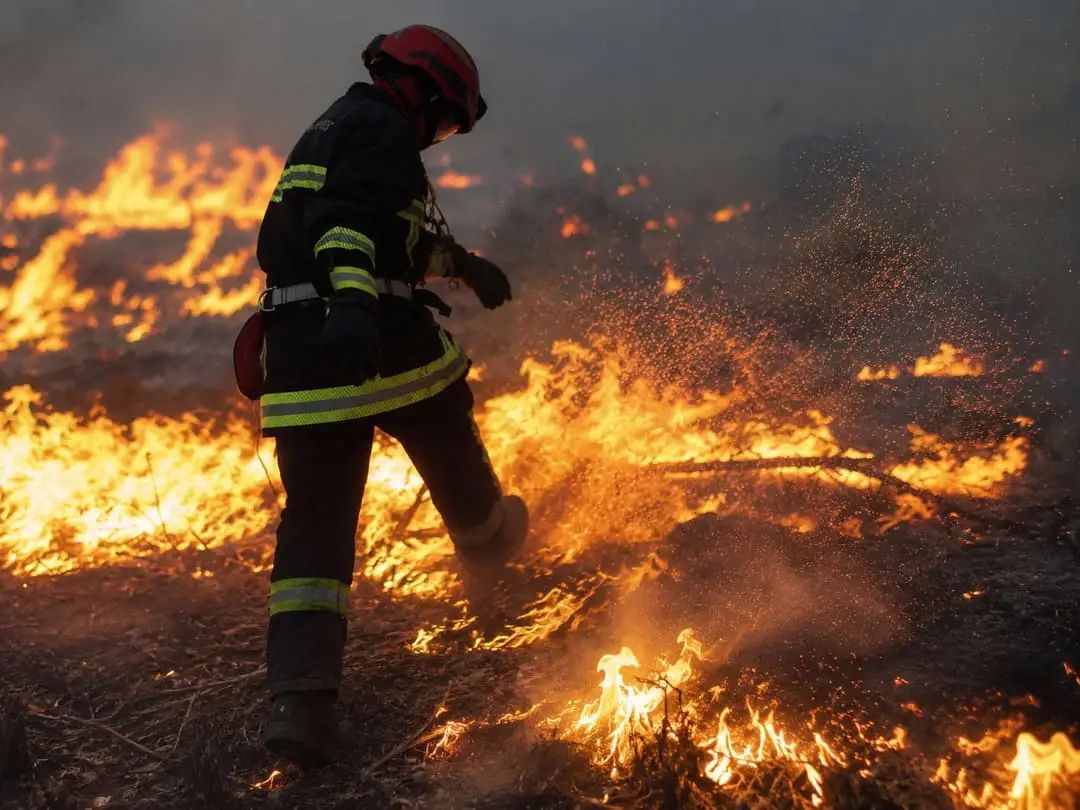
Southwest Europe wildfires have turned coastal vacations and suburban neighborhoods into a rolling evacuation emergency. On Tuesday, July 28, French authorities ordered nearly 4,000 more people out of campsites, holiday villages, tourist residences and leisure parks near Lacanau as renewed heat threatened firefighters’ fragile hold west of Bordeaux.
The new order arrived while about 60,000 residents around Bordeaux were being allowed home, exposing the unstable rhythm of departure and return. The disaster has become the next stage of Europe’s extreme heat crisis: roughly 330,000 people across France and Spain have been driven from homes or vacation sites, and safety boundaries can change within hours.
France’s New Order Shows Containment Is Still Fragile
Fresh flames erupted near Grand Crohot on the Lège-Cap-Ferret peninsula as crews expanded their aerial fleet to 23 planes and helicopters. Authorities had also completed 103 kilometers of firebreaks, but those defenses remain vulnerable to rising temperatures, falling humidity and embers hidden beneath vegetation.
That is the meaning of containment remains provisional. Firefighters may stop a front from advancing without eliminating the heat capable of restarting it. In Gironde, at least 110 firefighters have been injured, underscoring the cost of holding lines across an enormous and uneven perimeter.
The contrast around Bordeaux was especially stark. Thousands were ordered away from Atlantic tourist sites while residents of Le Haillan and parts of Mérignac and Eysines were permitted to return. Those going home were told to keep phones switched on and emergency bags ready.
Southwest Europe Wildfires Have Become a Displacement Crisis
The latest evacuation update shows that the emergency is no longer defined by one forest, town or national border. France and Spain are moving populations on a scale more commonly associated with major floods, earthquakes or war.
| Country | Reported displacement | Burned area in 2026 | Central pressure point |
|---|---|---|---|
| France | About 220,000 people | More than 1,160 square kilometers | Gironde and Landes fires near populated Atlantic areas |
| Spain | Nearly 100,000 people | About 1,530 square kilometers | Record Ávila fire and blazes west of Madrid |
| Combined | Roughly 330,000 people | More than 2,690 square kilometers | Repeated evacuations during extreme heat |
The combined number captures the scale, but not the instability. Some orders are precautionary, some last several days, and others are lifted before a new fire forces another community to move. The evacuation total is therefore a measure of exposure as much as destruction.
Returning Home Does Not End the Emergency
In Landes, about 15,000 evacuees were allowed back after a separate fire stopped advancing. French officials stressed that “fixed” did not mean extinguished; hot spots, drought and shifting winds could still produce flare-ups for days or weeks.
Spain also began lifting orders for thousands after overnight progress. At least 20,000 of the 79,000 people moved during the weekend were cleared to return, while restrictions eased in communities near Madrid, Ávila, Toledo and Castellón.
Evacuation is a moving line, not a single moment. Returning residents may encounter smoke, damaged power service, blocked roads, unstable trees or neighborhoods where fire crews still need unrestricted access. A lifted order can restore movement without restoring normal life.
The repeated transitions also strain shelters, hotels, transportation and public communication. Tourists may not know local roads, warning systems or alternate routes, making coastal evacuations especially difficult during the peak travel season.
The Fires Are Beginning to Create Their Own Weather
At its most violent, the Gironde blaze generated a pyrocumulonimbus cloud—the first recorded in France. These towering clouds can produce lightning, violent winds and new ignitions beyond the original fire front, making suppression far less predictable.
A similar cloud appeared above the record fire in Spain’s Ávila province. Fire-generated weather marks a dangerous change in scale: the blaze is no longer merely responding to atmospheric conditions but actively altering them.
Heat is tightening the window for control. Gironde was forecast to reach 33 to 35 degrees Celsius, while parts of Spain were expected to exceed 40 degrees during the country’s fourth heat wave of the summer. Western Europe had already recorded its hottest June, leaving forests and grasslands unusually dry.
That connection does not mean climate alone starts every fire. Ignition sources, wind, vegetation and land management still matter. A hotter, drier baseline, however, gives each spark more opportunity to become a fast-moving regional emergency.
Europe’s Shared Firefighting System Is Under Strain
The European wildfire response sent seven planes and four helicopters to France. Spain received six aircraft, 134 personnel and 41 vehicles through coordinated assistance from other countries.
Pre-positioned crews and the rescEU reserve allowed help to arrive faster than an improvised response would have. Europe’s shared capacity is now essential because major fires can overwhelm national aircraft fleets, exhaust crews and force governments to request specialized support simultaneously.
The system’s weakness appears when several countries face extreme conditions at once. Aircraft require maintenance, qualified pilots and suitable weather. A plane committed to one prolonged fire cannot quickly cover another emergency hundreds of miles away.
This season is therefore testing more than the number of available water bombers. It is testing whether Europe can rotate crews, protect responders from exhaustion and maintain enough reserve capacity for the next outbreak.
Heat, Wind and Reignition Will Decide the Next Phase
The most immediate signals are wind direction, nighttime humidity and the number of fresh ignitions along existing perimeters. Falling flames can create the appearance of control while deep heat remains in roots, peat, timber and debris.
Authorities will also need to judge reentry carefully. Allowing residents home too early risks another hurried evacuation; delaying too long increases pressure on families, shelters, employers and tourism businesses. Clear local instructions matter more than broad declarations that a fire is improving.
The Southwest Europe wildfires have become a continent-scale stress test for evacuation systems, cross-border firefighting and communities built beside combustible landscapes. The latest 4,000-person order shows that progress can coexist with renewed danger.
The decisive measure will not be how quickly officials announce containment. It will be whether people can return safely, crews can prevent reignition, and France and Spain can absorb the next heat surge without adding another wave of displacement.
FAQ’s
Why did France order another 4,000 people to evacuate?
Authorities evacuated tourist sites near Lacanau because renewed heat, low humidity and fresh flames threatened the fragile containment of the Gironde fire west of Bordeaux.
How many people have been displaced by the fires?
Roughly 330,000 people have been forced to leave homes or vacation sites across France and Spain, including approximately 220,000 in France and nearly 100,000 in Spain.
Are the wildfires in France and Spain contained?
Some fire fronts have stopped advancing, and several evacuation orders have been lifted. However, major fires remain active, while heat, drought, wind and hidden hot spots continue creating serious reignition risks.


