

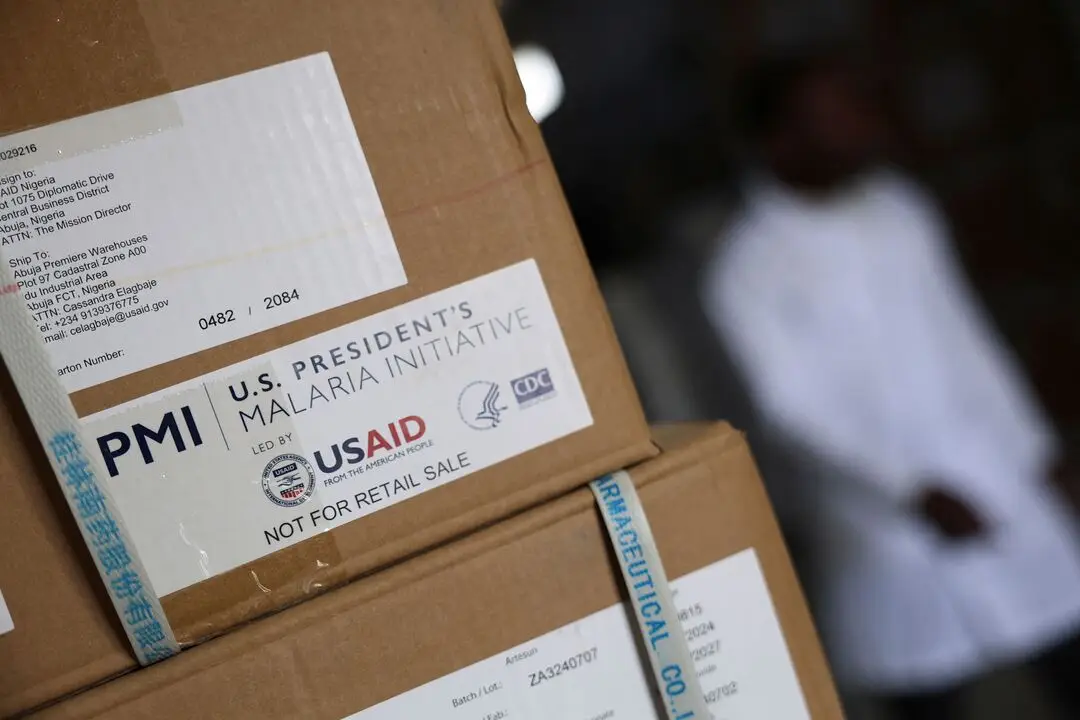
The backlash over global health funding cuts is building because the Trump administration is not merely trimming a foreign-aid account; it is reportedly trying to redirect $2 billion intended for disease prevention, maternal health, nutrition, and health security to help cover the cost of closing USAID. That decision lands at a volatile moment, when the United States is already reshaping its role abroad and health experts are warning that disrupted programs can become a direct risk to lives, stability, and American credibility.
This is the kind of policy fight that sounds technical until the consequences become visible. A budget line becomes a clinic without medicine, a malaria program without supplies, a tuberculosis patient without reliable treatment, or an outbreak surveillance system without staff. That is why the plan has triggered such a strong reaction: it appears to move money away from prevention and toward the administrative cost of dismantling the very system that delivered much of that prevention.
Why Global Health Funding Cuts Are Causing Backlash
Global health funding cuts create backlash because they force an uncomfortable question: what happens when money approved for lifesaving programs is redirected toward bureaucratic shutdown costs? The administration’s defenders may frame the move as part of a broader effort to reform foreign assistance, reduce waste, and bring U.S. aid under tighter political control. Critics see something more dangerous: a raid on health programs to pay for the consequences of dismantling USAID.
The reported $2 billion redirection is especially sensitive because the money was tied to programs fighting HIV/AIDS, tuberculosis, malaria, maternal and child health problems, nutrition needs, and global health security threats. Those are not abstract categories. They are the areas where funding interruptions can quickly become harm.
A public view of global health funding cuts shows why the issue has become larger than a partisan spending dispute. The United States has long been a central player in disease control, outbreak response, vaccine delivery, HIV treatment, and health-system support. When Washington pulls back abruptly, the effects spread beyond one country or one agency.
That is why this fight is not simply about whether the U.S. spends too much abroad. It is about whether the government can change priorities without breaking programs that depend on consistency. Health systems do not pause neatly while officials reorganize. Diseases do not wait for agencies to finish restructuring. The real-world cost of delay can be severe.
What The $2 Billion Plan Means
The plan reportedly aims to redirect roughly $2 billion in funding intended for global health programs to help pay for closeout costs connected to the shutdown of the U.S. Agency for International Development. That includes legal expenses, outstanding obligations, asset disposition, and other costs associated with winding down a major federal foreign-assistance agency.
The policy logic appears to be simple: if USAID is being closed or absorbed into a new structure, the government needs money to pay for that transition. The political problem is just as simple: the money was intended for health. When funds meant for disease programs are used to cover shutdown costs, the move looks less like reform and more like a transfer of burden from Washington’s administrative choices onto vulnerable populations abroad.
This is where accountability becomes unavoidable. Congress appropriates money for specific purposes. Agencies execute those priorities. The executive branch has some flexibility, but that flexibility is not unlimited. When money directed toward global health is rerouted, lawmakers, watchdogs, aid groups, and affected governments will ask whether the move respects both the law and the intent behind the funding.
The administration may argue that the old aid system was inefficient, politicized, or poorly aligned with U.S. interests. Those arguments deserve scrutiny on their own terms. But even a flawed system can support essential programs. Closing or reorganizing it without protecting core health functions creates exposure.
The Programs At Stake
The affected categories matter because they sit at the intersection of humanitarian need and global security. HIV/AIDS programs require uninterrupted medication, testing, data systems, and community outreach. Tuberculosis control depends on treatment continuity because incomplete treatment can worsen outcomes and contribute to drug resistance. Malaria programs rely on prevention tools, diagnostics, medicines, and surveillance. Maternal and child health programs often operate in places where public systems are already under strain.
Nutrition funding can be equally urgent. Malnutrition weakens immune systems, worsens disease outcomes, and increases the vulnerability of children and pregnant women. Global health security programs add another layer: they help detect and respond to outbreaks before they expand across borders.
Here is the practical breakdown.
| Funding Area | Why It Matters | Risk If Funding Is Disrupted |
|---|---|---|
| HIV/AIDS | Supports treatment, testing, prevention, and care networks | Treatment gaps, higher transmission risk, weakened data systems |
| Tuberculosis | Requires consistent detection and long treatment courses | Missed cases, interrupted care, possible drug resistance |
| Malaria | Depends on prevention, testing, medicines, and surveillance | More severe illness, preventable deaths, weaker outbreak detection |
| Maternal and child health | Supports care during pregnancy, birth, and early childhood | Higher risk for mothers, infants, and vulnerable children |
| Nutrition | Protects children and families from compounding health threats | Greater disease vulnerability and long-term developmental harm |
| Global health security | Detects outbreaks and strengthens emergency response | Slower alerts, weaker preparedness, greater cross-border risk |
The table helps explain why critics are alarmed. These programs are not interchangeable accounts. They are connected systems. Cutting one area can increase pressure on another, because disease, hunger, pregnancy risk, and weak surveillance often overlap in the same communities.
Why USAID’s Shutdown Changes The Debate
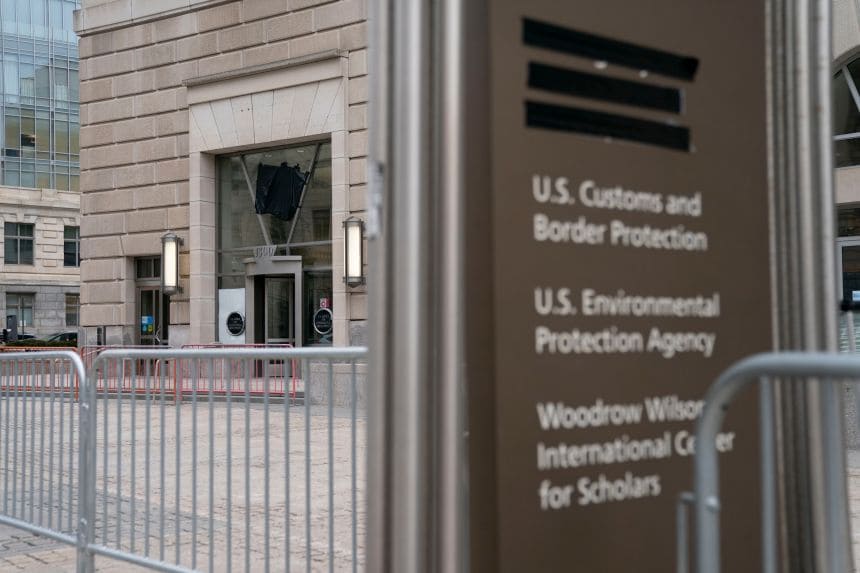
The funding dispute is inseparable from the administration’s broader decision to dismantle or drastically reduce USAID’s role. For decades, USAID served as the main U.S. foreign-assistance agency, delivering development, health, humanitarian, and emergency programs around the world. It was never free from criticism. No large agency is. But it had infrastructure, field relationships, contract systems, technical staff, and partner networks built over time.
Shutting down that machinery is not like closing a small office. It involves contracts, grants, staff, foreign missions, implementing partners, local organizations, warehouses, data systems, and program commitments. If the closure is fast, the disruption becomes more serious. If funding is then pulled from health programs to pay for the closure, the policy becomes even more controversial.
The core issue is capacity. A government can declare a new model of aid, but it still needs people, systems, and relationships to deliver results. If those are removed before replacements are ready, the transition can produce gaps no one fully owns.
This is why many critics view the $2 billion redirection as a second-order consequence of a first-order decision. The administration chose to dismantle the agency. Now it needs money to pay for the dismantling. The backlash comes from the belief that global health beneficiaries should not pay that price.
The Legal And Congressional Fight
The legal dimension may become central. If Congress provided money for global health, lawmakers may argue that the executive branch cannot simply redirect it to cover unrelated closeout costs. The administration may counter that it has authority to manage accounts within legal boundaries or that the reorganization serves broader foreign-policy objectives.
That dispute is not just procedural. It speaks to governance. In the U.S. system, Congress holds the power of the purse, while the executive branch implements policy. When those roles collide, courts, oversight committees, inspectors general, and appropriations rules become part of the story.
Aid groups and watchdogs may also challenge secrecy around the process. If the administration is reallocating funds, affected partners will want to know which programs lose money, when payments stop, and how obligations will be handled. A lack of transparency can magnify mistrust.
The public should not dismiss process as inside-Washington noise. In global health, process determines whether medicine arrives, whether staff are paid, whether clinics remain open, and whether countries can plan. A funding decision made in Washington can become a local health crisis weeks later.
The Human Cost Behind The Budget Fight
The strongest argument against abrupt redirection is human. Health programs depend on continuity. A treatment program cannot pause for months while officials decide which agency controls the contract. A mother cannot delay childbirth until a new funding model is approved. A malaria season does not wait for an accounting review.
That is why the human impact matters more than the political messaging. If funds are redirected away from active disease and health programs, the people most affected will not be lobbyists or agency officials. They will be patients, health workers, children, pregnant women, and communities already managing fragile health systems.
The problem is not only immediate service loss. It is the compounding effect. When HIV programs are interrupted, treatment adherence may suffer. When TB programs weaken, diagnosis and follow-up can break down. When nutrition programs shrink, children become more vulnerable to infection. When surveillance systems lose support, outbreaks may be detected later.
Global health is not a charity box that can be emptied and refilled without consequence. It is a network of trust, logistics, data, and local delivery. Once damaged, that network can take years to rebuild.
Why The Administration’s Reform Argument Still Matters
A serious analysis should acknowledge that foreign aid has long faced legitimate criticism. Some programs have been inefficient. Some contracts have been too dependent on large intermediaries. Some local governments have argued that aid systems can be paternalistic, slow, or too controlled by Washington-based organizations. A reform agenda is not automatically wrong.
The question is whether reform improves outcomes or simply reduces spending under a different label. Redirecting global health money to close USAID does not, by itself, prove a stronger model is coming. It proves that the administration is prioritizing shutdown costs over certain health allocations.
That distinction matters. Reform should be judged by quality, not rhetoric. A better aid system would protect lifesaving programs, improve local ownership, strengthen accountability, reduce waste, and preserve outbreak readiness. A weaker system would cut abruptly, obscure decisions, and leave partners guessing.
If the administration wants to make the case for a new model, it needs more than criticism of the old one. It needs a credible replacement plan, clear funding lines, measurable goals, and safeguards for patients whose treatment cannot be interrupted.
The Global Health Security Risk
Global health funding is not only altruistic. It is also a security investment. Disease outbreaks abroad can affect U.S. interests through travel, migration, trade, military deployments, and economic disruption. Surveillance systems, lab networks, and emergency-response programs help identify threats before they become harder and more expensive to contain.
That is why cuts to global health security can create blowback. A dollar not spent on early detection may become far more expensive if an outbreak spreads. A weakened lab network abroad may delay warning signs. A broken treatment system may worsen drug resistance. These are not remote concerns; they are part of modern national security.
The administration’s supporters may argue that U.S. taxpayers should not carry disproportionate global costs. That concern deserves debate. But the answer cannot be to weaken the very systems that help prevent health threats from reaching American shores.
This is where the politics become shortsighted. Cutting foreign health spending may look like a domestic win on paper. If the result is slower outbreak detection or a more unstable partner country, the long-term cost can return through emergency spending, border pressure, military burden, and avoidable disease risk.
The International Reaction Is Part Of The Story
The backlash does not come only from aid organizations. Foreign governments are watching closely. Countries that built health programs around U.S. support may now have to adjust budgets, seek new donors, or reduce services. Some may resent the abruptness. Others may use the moment to turn toward different partners.
This matters for U.S. influence. Foreign assistance has always been part humanitarian, part strategic. It builds relationships, creates diplomatic access, supports American health priorities, and strengthens alliances. When support is suddenly withdrawn or redirected, the United States loses more than goodwill. It may lose leverage.
Other powers can step into the gap. China, regional blocs, foundations, and multilateral institutions may gain influence where U.S. support recedes. That does not mean every gap will be filled. Some will not be. But the geopolitical consequences are real.
The administration may prefer a more transactional model of foreign assistance. That model can work in some settings, but health programs are not always suited to hard bargaining. Disease control depends on cooperation, not only contracts. If countries begin to view U.S. health funding as unstable or politically conditional, the value of American partnership declines.
Why Data And Sovereignty Concerns Add Another Layer
Recent U.S. efforts to reshape health partnerships have also raised concerns about data access, privacy, and sovereignty in some countries. Health data is sensitive. It can reveal disease patterns, population vulnerabilities, individual information, and institutional weaknesses. If funding agreements appear to demand broad access without sufficient safeguards, governments may resist.
That concern complicates the administration’s argument that it is simply improving efficiency. Efficiency cannot come at the expense of consent and protection. A stronger health partnership requires clear rules over who controls data, how it is used, and how privacy is protected.
The issue also intersects with trust. Countries may accept support more readily when they believe the arrangement respects their institutions. If they fear that aid is being tied to intrusive data demands or unrelated commercial interests, cooperation becomes harder.
Global health works best when sovereignty and shared responsibility are both respected. Funding alone is not enough. The relationship has to be legitimate.
What Critics Fear Most
Critics fear several outcomes at once. The first is immediate service disruption. The second is long-term damage to U.S. health leadership. The third is loss of congressional control over funds. The fourth is a precedent: money approved for lifesaving programs could be treated as a reserve for unrelated political restructuring.
That precedent would be serious. If global health accounts can be repurposed to pay for agency closure, then future health funding may become less reliable. Partners may hesitate to build programs around U.S. commitments. Local health workers may lose confidence. Donors may struggle to coordinate.
The biggest fear is fragmentation. Instead of a coherent global health strategy, the U.S. could end up with scattered bilateral deals, unclear oversight, weakened disease programs, and reduced emergency capacity. That would not be a leaner system. It would be a less predictable one.
Backlash is therefore not only emotional. It is institutional. The people objecting are often worried that the machinery of prevention is being dismantled faster than any replacement can be built.
What Supporters May See In The Plan
Supporters of the administration’s approach may see the plan differently. They may argue that USAID became too independent, too costly, too ideological, or too detached from American priorities. They may believe global health programs should be redesigned around direct agreements, measurable deliverables, and stronger national-interest tests.
That argument has political appeal. Taxpayers are often skeptical of foreign aid, especially when domestic needs are high. A government promising to cut waste and redirect power back to elected officials can find a receptive audience.
But even from that perspective, the plan needs discipline. If the administration wants to prove that a new system is better, it should protect critical health services during the transition. It should identify which programs continue, which end, and why. It should show how the new approach improves delivery rather than merely shrinking it.
A reform that saves money while increasing disease risk is not strategic. A reform that reduces bureaucracy while preserving lifesaving care could be. The difference depends on execution.
The Broader Emergency Context
This funding fight also arrives at a time when U.S. foreign policy is facing pressure on several fronts, from energy security to regional conflict and domestic political strain. In that environment, health funding may seem less urgent than military readiness or emergency diplomacy. That would be a mistake.
A country’s crisis posture is not built only through troops and sanctions. It also depends on health systems, supply chains, alliances, and the ability to prevent emergencies before they grow. The same logic applies in other high-stress national-security debates, where emergency policy decisions can quickly affect public trust, institutional capacity, and international confidence.
Global health funding belongs in that broader risk conversation. Disease outbreaks, famine, medical shortages, and unstable health systems can deepen conflict, drive displacement, and weaken allies. Treating health aid as optional spending misses the strategic connection.
The administration may want a harder, more national-interest-driven foreign policy. But a serious national-interest test should include disease prevention, health security, and long-term stability.
What Congress Should Ask Next
Congress should ask direct questions. Which accounts are affected? Which countries and programs lose funding? What legal authority supports the redirection? Which obligations remain unpaid? What happens to active grants and contracts? How will treatment continuity be protected? What replacement system will manage global health programs after USAID?
These questions are not partisan distractions. They are oversight basics. If the administration can defend the plan, it should be able to explain the mechanics. If it cannot explain the mechanics, lawmakers should be skeptical.
Congress should also require a public health impact assessment. Before funds are redirected, policymakers should know how many programs will be affected, which disease areas face the greatest disruption, and what mitigation plans exist. A decision of this scale should not rely on broad assurances.
The key principle is transparency. Health partners and affected countries need time to adjust. Sudden funding shocks are often more damaging than phased reductions because they leave no room for planning.
What Readers Should Think About Next
The public should look past the word “foreign.” Global health funding is foreign spending, but it is also prevention spending. It reduces disease risk, supports stability, protects supply chains, and strengthens relationships that can matter during emergencies.
Readers should also separate two questions. Is USAID beyond criticism? No. Does that justify redirecting $2 billion in health funding to pay for closure costs without clear safeguards? That is the core dispute. Reform and disruption are not the same thing.
The next developments to watch are congressional reaction, legal challenges, program notices, and country-level consequences. The most revealing signs may not come from Washington. They may come from clinics, health ministries, implementing partners, and patients who experience the funding changes directly.
The administration’s plan may still evolve. Money may be restored, rerouted differently, challenged in court, or modified under political pressure. But the backlash has already exposed a larger truth: global health systems are vulnerable when funding becomes unpredictable.
The Forward View On Global Health Funding Cuts
The controversy over global health funding cuts matters now because it tests whether the United States can pursue reform without sacrificing prevention. The administration may believe it is correcting a broken aid structure, but redirecting $2 billion away from health programs to cover shutdown costs risks sending a harsh message: lifesaving commitments can become secondary to political restructuring.
That message carries consequences. It can weaken confidence among partners, reduce America’s health leadership, and make vulnerable communities pay for decisions made far from them. It can also leave the U.S. less prepared for the very threats global health programs are designed to detect early.
A wiser approach would protect core disease programs, publish a clear transition plan, respect congressional intent, and prove that any new model delivers better outcomes. Reform should improve resilience, not break it. Fiscal responsibility should strengthen oversight, not obscure it. Political change should not erase the practical responsibility to keep treatment, prevention, and surveillance systems functioning.
The debate will likely continue through Congress, courts, agencies, and international partners. But the central point is already clear. Global health funding cuts are not just numbers in a budget fight; they are decisions about whose risks count, whose lives remain visible, and whether American power is measured only by what it can cut—or by what it still has the judgment to protect.


