

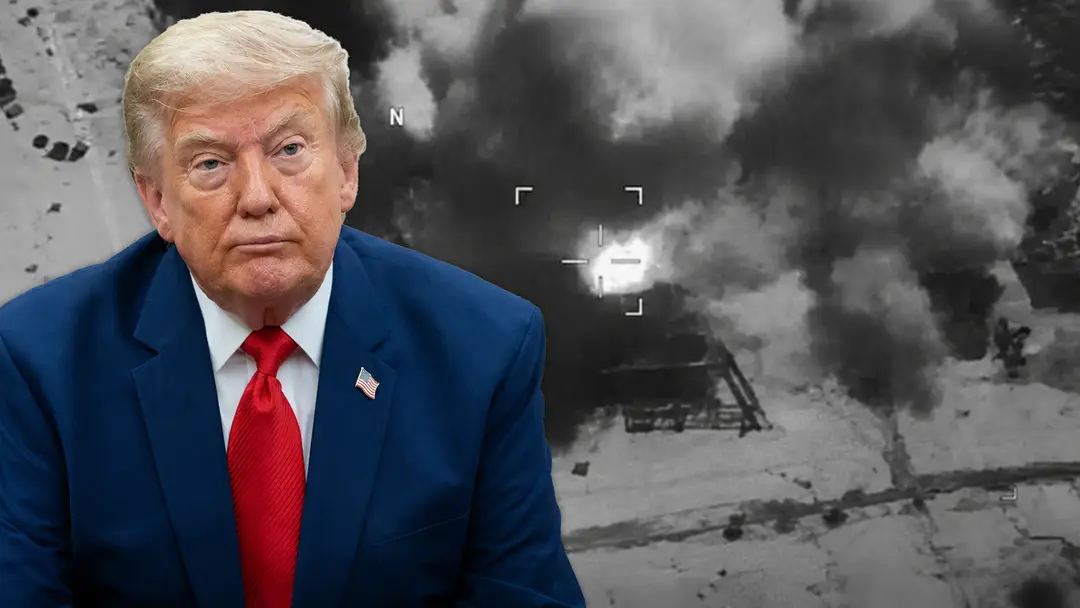
The US strikes on Iran have entered a more dangerous phase because Washington is no longer talking only about retaliation or protecting shipping. After an 11th consecutive night of attacks, President Donald Trump is publicly threatening a deeply buried site near Natanz that may be connected to Iran’s future nuclear program.
That shift matters beyond the battlefield. The conflict is already feeding the U.S.-Iran oil surge, disrupting the Strait of Hormuz and pushing energy risk back into American prices. A strike on Pickaxe Mountain would add a nuclear escalation layer to a war spreading across military bases, shipping lanes, and regional infrastructure.
The Eleventh Night Changed the Meaning of Retaliation
U.S. Central Command said its latest operation targeted military operations centers, maritime capabilities, aircraft hangars, drone storage facilities, and logistics infrastructure. The command described the purpose as degrading Iran’s ability to threaten commercial shipping through the Strait of Hormuz.
The latest U.S. strike details show a campaign aimed at several parts of Iran’s military system. This is no longer a single response tied to one attack. The target set is widening as the conflict continues night after night.
Iran has answered with missile and drone attacks across the region. Jordan said it intercepted missiles and drones over Aqaba, while alerts also sounded in Bahrain and Saudi Arabia. Each exchange increases the chance that deterrence produces another cycle of retaliation.
US Strikes on Iran Are Expanding Faster Than Diplomacy
The military campaign has expanded while ceasefire efforts show little visible progress. Iranian officials say messages are still moving through mediators, but Washington has questioned whether Tehran is serious about negotiations.
That creates an unstable mix. Military planners are increasing pressure while diplomats have not established terms both sides accept. The objective remains unclear: reopen Hormuz, punish attacks on U.S. forces, force nuclear concessions, or weaken Iran’s wider military position.
Those goals overlap, but they require different exit conditions. A campaign designed to protect shipping could stop once commercial traffic stabilizes. One intended to reshape Iran’s nuclear choices or military capacity could last much longer.
The danger is strategic drift. Repeated tactical victories can destroy facilities without answering what political condition would allow the United States to stop striking.
Pickaxe Mountain Is the Nuclear Threshold
Pickaxe Mountain sits south of the Natanz enrichment complex and has been under construction for years. Satellite imagery shows multiple entrances and extensive excavation, but international inspectors have never gained access, leaving its exact purpose uncertain.
The underground facility assessment places parts of the project roughly 80 to 100 meters underground, possibly deeper. Experts say its size could support centrifuge production or uranium enrichment, but those possibilities have not been verified through inspections.
Trump said the United States would hit the area “pretty soon” and “very heavily.” His language moves the site from a long-term intelligence concern toward a potential operational target, even though its contents and military value remain uncertain.
That is the nuclear threshold. Striking launchers or naval infrastructure can be framed as immediate force protection. Bombing a suspected underground nuclear installation raises questions about radioactive risk, international law, Iranian retaliation, and whether force can permanently stop a dispersed technical program.
Five Signals Show Where the Conflict Is Moving
The escalation is easier to understand by separating immediate military actions from wider strategic consequences.
| Escalation signal | Current development | Why it matters |
|---|---|---|
| Strike tempo | Eleven consecutive nights of U.S. attacks | Creates a sustained campaign rather than a limited response |
| Target expansion | Operations centers, hangars, drones, maritime assets, and logistics | Weakens multiple layers of Iranian capability |
| Nuclear threat | Trump identified Pickaxe Mountain as a possible target | Raises the stakes beyond shipping and conventional forces |
| Regional retaliation | Iran has targeted locations in Jordan, Bahrain, and elsewhere | Increases exposure for U.S. forces and partners |
| Diplomatic slowdown | Ceasefire efforts show little public progress | Leaves escalation without a visible exit route |
The nuclear threat is not an isolated remark. It sits inside a pattern in which operations are expanding geographically and strategically while negotiations fall behind.
Hormuz Turns Military Pressure Into Economic Risk
The Strait of Hormuz remains the conflict’s most immediate global pressure point. Commercial shipping has been disrupted, operators face higher risk, and oil prices have climbed as markets price in longer interruptions.
Iran-backed Houthis have also threatened Saudi-linked shipping in the Red Sea, putting pressure on an alternative export route. If both waterways become less reliable, the effects would spread through fuel prices, freight costs, inflation expectations, and allied economies.
That means economic exposure is expanding even when individual attacks hit military targets. Washington may intend to restore navigation, but every escalation can convince markets that the region is becoming less predictable.
The administration faces a difficult test: military pressure must produce safer shipping faster than it produces fear, retaliation, and supply disruption.
The Next Decision Is Whether the Threat Becomes the Mission
The most important signal will be whether U.S. forces strike Pickaxe Mountain. A threat can pressure Tehran; an attack would commit Washington to defending the logic of targeting a site whose contents remain uncertain.
The second signal will be the next target list. Continued attacks on military infrastructure would suggest a focus on conventional capabilities. Strikes closer to nuclear, power, or civilian systems would indicate a broader strategy.
The US strikes on Iran matter because each new operation is beginning to change the purpose of the war. Trump can still use Pickaxe Mountain as leverage, but once it is attacked, the nuclear question moves from rhetoric into the center of the campaign.
Washington’s challenge is no longer proving it can hit Iran. It is defining what those strikes should achieve, what outcome would end them, and whether escalation can produce a safer region before it creates a larger war.
FAQ’s
What is Pickaxe Mountain?
Pickaxe Mountain is a deeply buried construction site south of Iran’s Natanz enrichment complex. Its precise purpose remains unverified because international nuclear inspectors have not accessed the facility.
Why are U.S. forces continuing to strike Iran?
Washington says the attacks are intended to weaken Iranian military capabilities used against commercial shipping and regional targets. The campaign has also intensified following deadly attacks on American personnel.
Has Trump ordered an attack on Pickaxe Mountain?
Trump has publicly threatened to strike the area soon, but no attack on Pickaxe Mountain had been confirmed when the threat was made.


