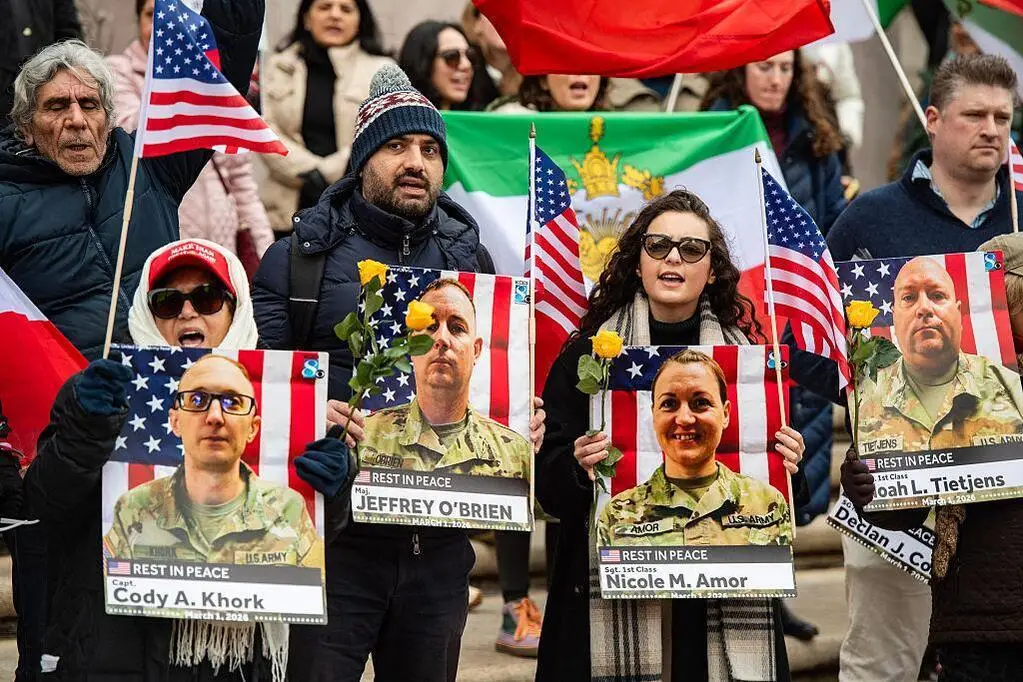
A group of demonstrators assembled in downtown Boston to express support for the United States’ military stance toward Iran while also paying tribute to American service members. Although the gathering involved only a few dozen participants, organizers said the event was meant to send a clear message about patriotism, national defense, and solidarity with the U.S. armed forces.
The rally took place in a public square near several historic landmarks, attracting attention from passersby, media outlets, and local residents. Participants waved American flags, displayed banners supporting U.S. troops, and held signs backing a strong response to rising tensions with Iran.
While the gathering was relatively small, supporters said the purpose was not necessarily to draw massive crowds but to highlight their perspective on global security issues and demonstrate appreciation for serving overseas.
Supporters Emphasize Patriotism and National Defense
Many individuals at the event described their participation as an act of patriotism and respect for the military. Several attendees spoke about the sacrifices made by members of the armed forces and said they believed the United States must remain prepared to confront threats abroad.
Some demonstrators argued that a firm military posture is necessary to protect American interests and allies in the Middle East. They also stressed that honoring soldiers was an equally important aspect of the gathering.
Participants displayed messages praising what they called the “bravery and dedication” of U.S. troops stationed in various parts of the world. For many of them, the rally served as both a political statement and a moment of recognition for service members who risk their lives in defense of national security.
Supporters emphasized that their presence was intended to highlight support for soldiers regardless of political differences surrounding international conflicts.
Rising Tensions Between the United States and Iran
The Boston gathering occurred during a period of heightened tensions between the United States and Iran. Relations between the two nations have fluctuated for decades, often involving disputes over nuclear development, regional influence, and military activities in the Middle East.

Recent developments have further intensified concerns among policymakers and international observers. Reports of military strikes, retaliatory actions, and escalating rhetoric have raised fears that the situation could lead to broader confrontation.
For supporters attending the Boston rally, these developments reinforced their belief that the United States must maintain a strong defense posture. Many said they view Iran as a significant strategic challenge and believe American leaders must respond decisively when threats emerge.
At the same time, the broader international community continues to call for diplomatic solutions that could reduce tensions and prevent large-scale conflict.
Honoring the Sacrifices of American Soldiers
Beyond the geopolitical debate, much of the rally focused on recognizing the service and sacrifice of U.S. military personnel. Participants held moments of reflection to acknowledge those who have served in recent conflicts as well as veterans from earlier generations.
Some attendees were family members of current or former service members, and they spoke about the personal impact of military service on families across the country.
Speakers at the gathering highlighted the dedication required of soldiers who deploy overseas and operate in challenging environments. They emphasized that regardless of political disagreements surrounding military decisions, the individuals serving in uniform deserve recognition and respect.
The event included speeches that praised the courage and commitment of troops while encouraging Americans to remain supportive of those currently stationed abroad.
Mixed Reactions From the Public
As with many demonstrations related to international conflicts, the Boston rally generated a range of reactions from the public. Some passersby expressed support for the gathering and agreed with the message of honoring soldiers.
Others questioned the idea of endorsing war or military escalation, arguing that diplomatic solutions should remain the priority when dealing with global disputes.
Boston has long been a city known for civic engagement and political activism, and public demonstrations reflecting differing viewpoints are common. While the pro-military rally remained peaceful, it also highlighted the diversity of opinions surrounding U.S. foreign policy.
Observers noted that debates about military action often involve complex questions about national security, global stability, and humanitarian consequences.
The Role of Public Demonstrations in Political Debate
Events like the Boston rally illustrate how public gatherings continue to play a role in political discourse across the United States. Demonstrations allow individuals and groups to express their views on major national issues, including foreign policy decisions.

For some participants, attending rallies provides an opportunity to show solidarity with causes they believe are important. For others, demonstrations serve as a platform to challenge government policies or advocate alternative approaches.
In the case of the Boston event, organizers said their goal was to raise awareness about standing behind American troops and maintaining national strength in the face of international threats.
Regardless of where individuals stand on the issue, gatherings like this reflect the broader conversation taking place across the country about the role of the United States in global affairs.
Broader Implications for U.S. Foreign Policy
The demonstration in Boston represents just one example of how public opinion continues to shape discussions surrounding U.S. foreign policy. As tensions involving Iran remain a topic of global attention, policymakers face the challenge of balancing military readiness with diplomatic efforts.
Experts often note that conflicts in the Middle East have far-reaching consequences, affecting international alliances, energy markets, and regional stability.
Public demonstrations supporting or opposing military action reflect the broader national debate over how the United States should respond to international threats while maintaining commitments to peace and diplomacy.
Conclusion
The Boston gathering brought together dozens of individuals who wanted to express support for U.S. military actions related to Iran while honoring American soldiers. Though modest in size, the rally highlighted strong feelings about patriotism, national defense, and respect for those serving in the armed forces.
At the same time, the event underscored the ongoing debate within the United States about foreign policy decisions and military involvement abroad. As tensions between Washington and Tehran continue to evolve, discussions about security, diplomacy, and the role of the military are likely to remain central topics in both political and public arenas.