

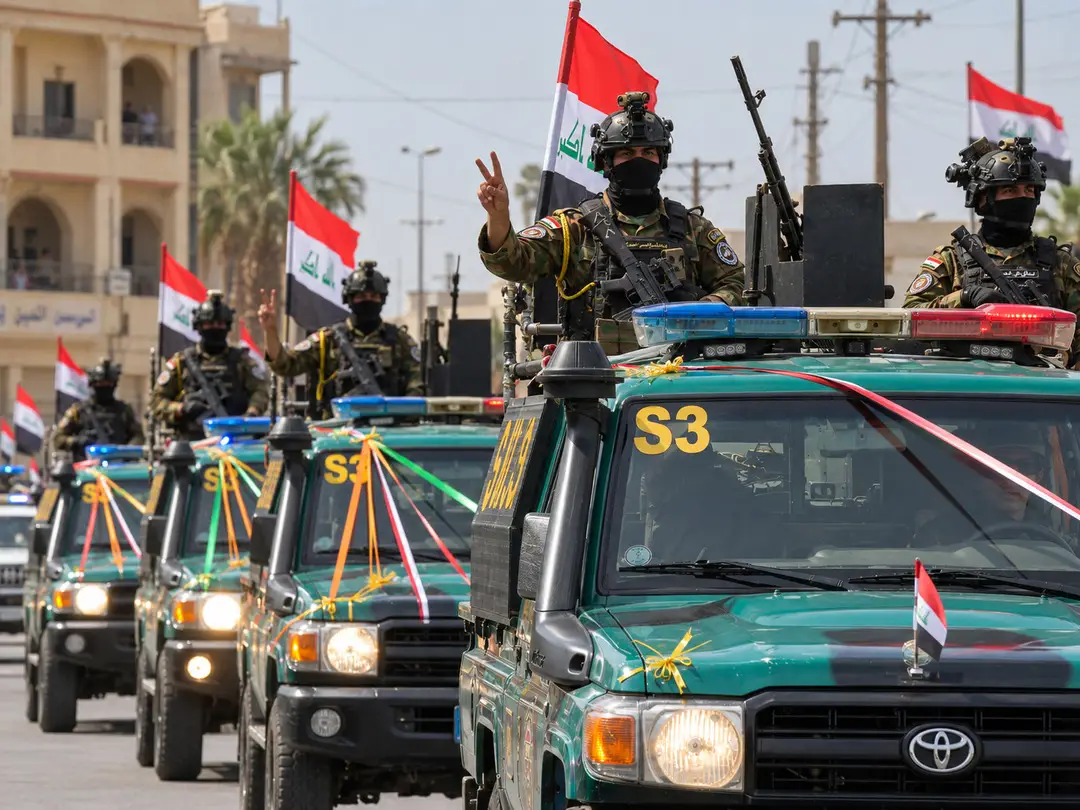
The final U.S. troops have left Iraq, closing another chapter in American military involvement that began with the 2003 invasion and resumed in 2014 as a counter-Islamic State mission. The departure is a sovereignty milestone for Baghdad, but it also removes a layer of intelligence and military support while ISIS cells remain active and Iran-aligned armed groups still influence Iraq’s security landscape.
For readers following a US new report on Iraq, the harder question begins after the last aircraft leaves: can the Iraqi state keep militant threats contained while asserting authority over armed factions that do not answer fully to the government? The answer matters beyond Iraq because the country remains exposed to the wider U.S.-Iran confrontation and regional pressure on U.S. partners.
The Withdrawal Ends a Mission, Not Iraq’s Security Problems
U.S. Central Command said forces and equipment completed their departure from Erbil Air Base on September 30, formally ending Operation Inherent Resolve in Iraq. The pullout followed a transition negotiated by Washington and Baghdad and was completed under the Trump administration. Reuters’ account of the final withdrawal described celebrations in Baghdad and Najaf alongside fears that the departure could create room for armed groups or ISIS remnants.
That tension is the story. Sovereignty now comes with full responsibility. Baghdad gains distance from a long foreign troop presence, but Iraqi forces also lose a visible military backstop that had contributed intelligence, surveillance and operational support.
A US New Report Is Really About the Security Handoff
The withdrawal does not end every U.S. security relationship with Iraq. In its official military statement, CENTCOM said the move is part of a transition toward a bilateral defense relationship. Combined Joint Task Force-Operation Inherent Resolve remains active from Jordan, while U.S. forces continue counter-ISIS operations in Syria.
Iraq is therefore not moving from coalition support to complete isolation. It is moving toward a model in which Iraqi forces are expected to lead, with American cooperation becoming more limited and less physically embedded inside the country.
U.S. military officials say Iraqi and Kurdish forces now have the capacity and operational independence to manage domestic threats. The test will be whether that assessment holds when intelligence becomes less immediate, air-defense demands rise or militants exploit gaps between federal and Kurdish security structures.
Baghdad Inherits Two Very Different Security Tests
ISIS and Iran-aligned militias pose different challenges, and combining them into one threat would obscure the choices Baghdad faces.
| Pressure point | What changes after withdrawal | Main test for Baghdad |
|---|---|---|
| ISIS sleeper cells | Less direct U.S. military support inside Iraq | Disrupt networks before they regroup |
| Iran-aligned militias | Foreign troop presence no longer dominates their justification | Extend state authority over armed groups |
| Intelligence | Iraqi forces carry more of the collection burden | Preserve early warning |
| Kurdish security | Erbil loses the permanent U.S. military presence | Maintain defense coordination |
| Regional spillover | Iraq remains between Washington and Tehran | Keep outside conflict from becoming an Iraqi war |
ISIS no longer controls large areas as it did in 2014, but Iraqi security officials continue to warn about sleeper-cell activity. The danger is less a sudden return of the former territorial caliphate than the possibility that smaller networks could rebuild if pressure weakens.
Militias raise a different problem. Some Iran-aligned groups have political and institutional influence, while armed factions have also operated beyond complete government control. A U.S. departure does not automatically resolve the imbalance.
Iran’s Influence Becomes Harder to Separate From Iraqi Sovereignty
Iran and allied groups have portrayed the American departure as a strategic success. That does not mean future Iraqi policy will automatically favor Tehran, but the withdrawal removes a military presence that analysts viewed as one counterweight to Iranian influence.
It could also sharpen Iraq’s internal debate over armed authority. Groups that justified retaining weapons partly through opposition to foreign troops now face a changed environment. Baghdad, in turn, faces pressure to show whether national institutions can establish effective control over security decisions.
That is particularly sensitive because Iraq has repeatedly been caught between Washington and Tehran. With fewer American forces physically present, Iraqi leaders must manage that rivalry while preventing either external confrontation or domestic armed competition from weakening state authority.
The Next Signals Will Come From Intelligence, Militias and Erbil
The months after the withdrawal will matter more than the ceremony. A stable transition would be reflected in continued pressure on ISIS cells, effective federal-Kurdish coordination and no major deterioration in intelligence or air-defense coverage.
Militia behavior will be another indicator. If armed factions reduce independent operations and accept stronger government control, Baghdad’s sovereignty claim gains substance. If they expand their influence or openly challenge state decisions, concerns about a security vacuum will intensify.
Erbil deserves particular attention because the final U.S. forces departed from the Kurdish region, where concerns about security after the American exit have been especially visible. The danger is not necessarily an immediate breakdown; it is gradual erosion of deterrence if replacement arrangements prove weaker than the coalition support they replace.
Iraq Will Judge the Withdrawal by What Fills the Space
The U.S. departure is an endpoint for one military mission, but it begins a more demanding Iraqi security model. Baghdad must now show that sovereignty means more than the absence of foreign troops: it also requires effective institutions, reliable intelligence and government authority over armed actors.
That is the central issue behind this US new report. If Iraqi forces keep ISIS contained while the government strengthens control over militias, the withdrawal will look like a functioning security transition. If either side of that equation weakens, the space left by American troops could be filled by forces Baghdad has less ability to control.
Frequently asked questions
Why did U.S. troops leave Iraq in September 2026?
Washington and Baghdad had agreed on a phased transition away from the U.S.-led coalition mission. The final departure from Erbil completed that process and shifted primary responsibility for Iraqi security to Iraqi forces.
Is ISIS defeated in Iraq?
ISIS no longer controls significant territory in Iraq, but sleeper cells and smaller militant networks remain a security concern. Iraqi forces are now expected to take the leading role in detecting and disrupting them.
Does the withdrawal end U.S.-Iraq military cooperation?
No. The coalition mission inside Iraq has ended, but Washington says the two countries are transitioning toward a bilateral defense relationship while U.S.-led counter-ISIS activity continues elsewhere in the region.


