

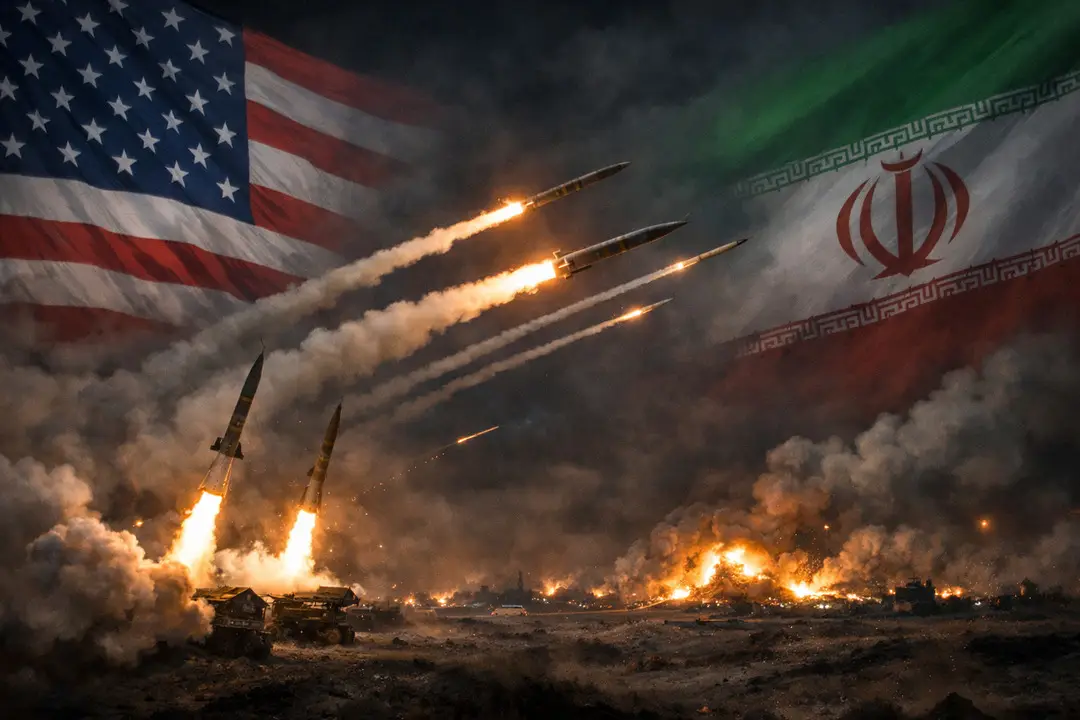
The escalating confrontation between the United States and Iran in early 2026 has triggered widespread concern across the international community. What began as a series of targeted strikes and strategic maneuvers has quickly evolved into a volatile standoff with the potential to reshape geopolitical dynamics.
With reports of U.S. military involvement alongside Israel and subsequent retaliatory actions from Iran, the situation has intensified at a pace that has alarmed global leaders. Analysts are now questioning whether this escalation could mark the beginning of a broader regional conflict or even a larger global confrontation.
What Sparked the Latest Escalation?
The current crisis did not emerge overnight. Tensions between the United States and Iran have been simmering for years, driven by disagreements over nuclear development, regional influence, and military presence in the Middle East.
Recent events, however, have accelerated the situation. Coordinated strikes targeting Iranian-linked facilities signaled a shift toward more direct confrontation. In response, Iran launched retaliatory attacks against U.S. positions in the region, raising the stakes significantly.
This cycle of action and reaction has created a dangerous feedback loop. Each move increases the likelihood of further escalation, making de-escalation more difficult with every passing day.
Strategic Importance of the Region
The Middle East remains one of the most strategically important regions in the world. It is home to critical energy resources, major shipping routes, and longstanding political alliances.
One key area of concern is the Strait of Hormuz, a narrow waterway through which a significant portion of the world’s oil supply passes. Any disruption in this corridor could have immediate and far-reaching consequences for global markets.
The presence of U.S. military bases across the region further complicates the situation. These installations serve as both defensive positions and potential targets, increasing the risk of broader military engagement.
The Role of Allies and Regional Powers
The involvement of allies adds another layer of complexity to the conflict. Israel’s role in recent operations has heightened tensions, while neighboring countries are closely monitoring developments.
Regional powers must balance their own security concerns with the risk of being drawn into a wider conflict. Some nations have called for restraint and diplomatic solutions, while others have strengthened their defensive postures.
International actors, including European nations, have urged both sides to return to negotiations. However, the rapidly evolving situation has made diplomatic efforts more challenging.
Military Capabilities and Modern Warfare
Both the United States and Iran possess significant military capabilities, though they differ in scale and strategy. The U.S. maintains advanced technology, global reach, and extensive resources, while Iran relies on asymmetric tactics, regional alliances, and missile systems.
Modern warfare in this context is not limited to traditional battlefield engagements. Cyber operations, drone strikes, and proxy conflicts all play a role in shaping the outcome.
This multifaceted approach increases uncertainty. Unlike conventional wars, where fronts are clearly defined, modern conflicts can unfold across multiple domains simultaneously.
Global Economic Implications
The potential economic impact of the U.S.-Iran conflict cannot be overstated. Energy markets are particularly sensitive to developments in the Middle East, and even minor disruptions can lead to significant price fluctuations.
Rising oil prices could contribute to inflation, affecting economies worldwide. Supply chain disruptions may also emerge, particularly if key shipping routes are compromised.
Financial markets have already shown signs of volatility, with investors seeking safer assets amid uncertainty. The longer the conflict persists, the greater the risk of sustained economic instability.
Diplomatic Efforts and Calls for De-Escalation
Despite the rising tensions, diplomatic channels remain active. Global leaders have emphasized the importance of dialogue and conflict resolution.
Efforts are being made to bring both sides back to the negotiating table, though progress has been limited. Trust between the parties is low, and recent events have further complicated the situation.
The success of these diplomatic initiatives will play a crucial role in determining whether the conflict escalates or stabilizes. Without meaningful engagement, the risk of continued confrontation remains high.

Is a Larger War Inevitable?
The central question remains whether the current conflict will expand into a broader war. While the situation is serious, it is not yet certain that escalation will continue indefinitely.
Several factors will influence the outcome, including political decisions, military responses, and international pressure. Both sides may seek to avoid a full-scale war due to the potential costs and consequences.
However, the risk of miscalculation is significant. A single incident whether intentional or accidental could trigger a chain reaction that leads to wider conflict.
Lessons from Past Conflicts
History offers valuable insights into similar situations. Previous confrontations in the region have demonstrated how quickly tensions can escalate and how difficult it can be to contain them.
At the same time, history also shows that diplomacy can play a decisive role in preventing large-scale war. Strategic restraint and negotiation have, in many cases, helped to de-escalate potentially catastrophic situations.
Understanding these lessons is essential for navigating the current crisis.
What Comes Next?
As the situation continues to evolve, the world is watching closely. The coming weeks will be critical in determining the direction of the conflict.
Will diplomatic efforts succeed in reducing tensions, or will the cycle of retaliation continue? The answer will shape not only the future of the Middle East but also the broader global landscape.
For now, uncertainty remains the defining feature of the U.S.-Iran conflict in 2026. While the possibility of a larger war cannot be dismissed, it is not yet inevitable.
A Critical Moment in Global Stability
The escalating tensions between the United States and Iran represent a pivotal moment in international relations. The stakes are high, with implications for security and geopolitical stability.
While the situation is fluid, one thing is clear: the decisions made in the coming days will have lasting consequences. Whether this conflict becomes a larger war or a turning point toward diplomacy will depend on the actions of all parties involved.
In a world already facing numerous challenges, the importance of stability and cooperation has never been greater.


