

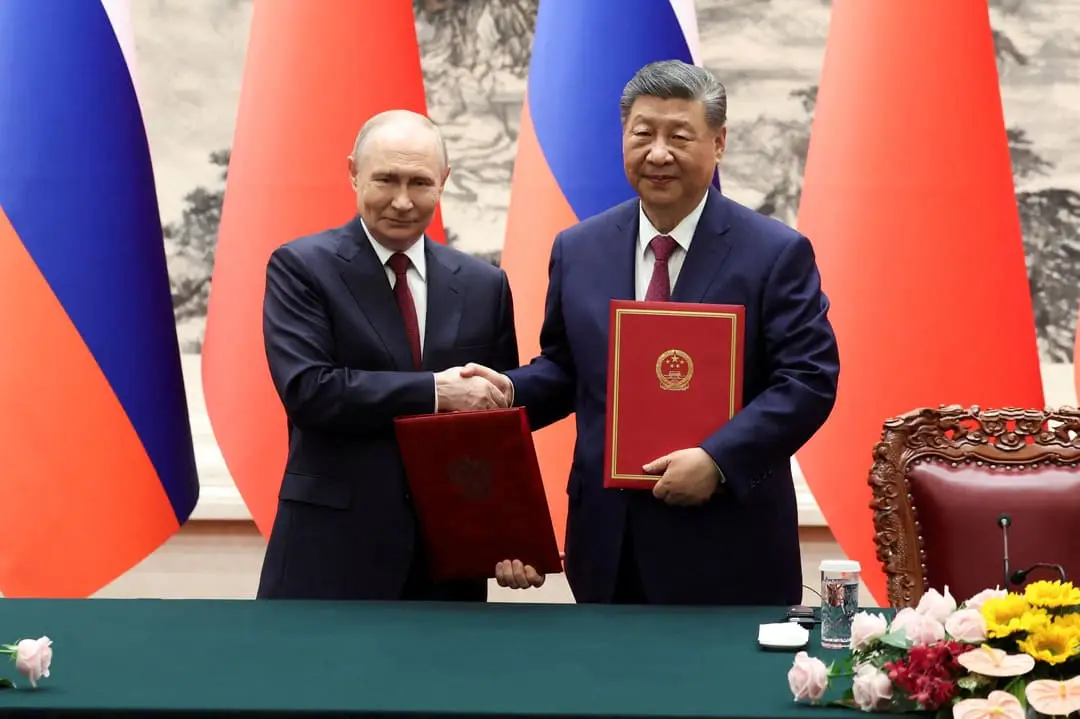
The China Russia gas deal was expected to turn a carefully staged Xi-Putin summit into something more durable than diplomatic theater. Instead, the Beijing meeting produced strong criticism of the United States, but no final agreement on the pipeline project Moscow has spent years trying to secure.
That failure matters because it shows the real balance inside the China-Russia relationship. Xi Jinping and Vladimir Putin may be aligned against Washington on several strategic issues, but Beijing is still bargaining like a powerful buyer with options, while Moscow is negotiating from a position shaped by sanctions, lost European markets, and urgent energy needs.
The Summit Delivered Political Unity, Not A Pipeline Breakthrough
The Beijing meeting gave Xi and Putin a platform to present themselves as partners resisting U.S. influence over global security, energy, and diplomacy. Their joint criticism of Washington’s missile defense plans and nuclear policy fit a familiar pattern: China and Russia want to frame themselves as defenders of strategic stability against what they see as U.S. pressure.
But the most important unfinished business was the Power of Siberia 2 pipeline. The proposed route would move large volumes of Russian gas to China through Mongolia, giving Moscow a major eastern outlet and giving Beijing another long-term supply channel. The project has strategic value, but the latest summit still ended without a final contract.
That gap between rhetoric and agreement is the core story. A joint statement can signal alignment. A pipeline deal requires price, financing, delivery terms, route commitments, and years of trust. The two leaders could agree on criticizing the United States, but they could not close the commercial terms behind the China Russia gas deal.
Why The China Russia Gas Deal Is Harder Than It Looks
On paper, the deal seems obvious. Russia has gas. China needs energy security. Both countries want to reduce exposure to Western pressure. Yet the economics are far more delicate than the political messaging suggests.
Russia needs new buyers because its relationship with Europe has been fundamentally damaged by war, sanctions, and the collapse of trust around Russian energy supplies. China, however, does not need to rush. It can buy pipeline gas from Russia, import liquefied natural gas, expand domestic production, invest in renewables, and diversify supply relationships across several regions.
That gives Beijing leverage. The more Moscow needs the project, the more China can press for favorable pricing and flexible terms. The unresolved pricing issue is not a small technical matter. It is the central question of who benefits most from the pipeline and who absorbs the long-term risk.
The proposed Power of Siberia 2 pipeline is therefore not just an infrastructure project. It is a test of whether Russia can replace lost European energy leverage without becoming overly dependent on China.
For Moscow, the opportunity is obvious. For Beijing, the opportunity is conditional. China wants secure energy, but it also wants the deal on terms that reflect its stronger negotiating position.
The Pressure Points Behind The Unfinished Deal
The table below shows why the pipeline remains difficult despite the public unity between Xi and Putin.
| Pressure Point | Why It Matters | Who Has More Leverage |
|---|---|---|
| Gas pricing | The final price will decide whether the project strengthens Russia or forces it into a discounted long-term supply role. | China |
| Pipeline timing | Moscow wants momentum, but Beijing can afford to move slowly if the terms are not attractive. | China |
| Energy security | China wants supply diversity, not dependence on one partner. | China |
| Political symbolism | Russia needs the deal to prove its eastward pivot is working. | Russia needs it more |
| Route and financing | Large infrastructure requires clarity on construction responsibility, risk, and long-term returns. | Unclear |
The key takeaway is that the pipeline is not blocked by one simple issue. It is stalled because each unresolved detail affects the balance of power. Russia wants a strategic breakthrough; China wants a favorable contract. Those goals overlap, but they are not identical.
Beijing Is Signaling Support Without Surrendering Leverage
Xi’s strategy is easy to misread. China is not distancing itself from Russia in any simple sense. The two countries share broad opposition to U.S. dominance, support a more multipolar global order, and coordinate across security and diplomatic issues more openly than they did a decade ago.
Still, China is careful about how much it gives away. Beijing can stand beside Moscow politically while refusing to sign a gas deal that does not meet its own commercial standards. That is not hesitation. It is disciplined statecraft.
The strongest signal from the summit may be support without surrender. China wants Russia as a strategic partner, but not at any price. Beijing can use the relationship to counter U.S. pressure while also preserving bargaining power over energy, trade, and infrastructure.
That dynamic also helps explain why the meeting looked warm but produced limited hard deliverables. The public ceremony matters. The private terms matter more. Russia wants a visible win. China wants a useful deal.
That distinction is especially important for readers following broader U.S.-China diplomacy. Major-power meetings often mix hospitality with pressure, and the same pattern appeared in coverage of Trump’s arrival in China as Xi delivered a colder warning behind the warm welcome. In Beijing’s diplomatic style, tone and substance do not always move in the same direction.
Russia’s Energy Pivot Carries A Hidden Cost
For Putin, the lack of a final gas agreement is more than a delay. It exposes the cost of Russia’s forced pivot away from Europe. Moscow has spent years trying to show that Western sanctions and European energy diversification cannot isolate Russia from major markets. China is central to that argument.
But replacing Europe with China is not the same as replacing one customer with another on equal terms. Europe once gave Russia multiple large buyers, established routes, and deep pricing influence. China offers scale, but it also brings concentration risk. If Russia depends too heavily on one dominant buyer, its leverage weakens.
That is the uncomfortable pressure point beneath the summit. The pipeline could bring Russia long-term revenue, but it could also lock Moscow into a more junior position in the relationship. China would gain energy security and pricing influence. Russia would gain demand, but with fewer alternatives.
The issue is not whether Russia and China will keep cooperating. They almost certainly will. The issue is whether cooperation strengthens both sides equally. On energy, the answer looks increasingly uneven.
The broader picture around growing China-Russia energy ties shows why the pipeline remains so important. Russia is trying to prove it has durable alternatives to Western markets. China is trying to secure supply without giving up its negotiating advantage.
The U.S. Criticism Was Loud, But The Commercial Silence Was Louder
The summit headlines will naturally focus on Xi and Putin criticizing Washington. That matters, especially as China and Russia try to present a common front against U.S. policy on security, sanctions, and global governance.
But the absence of a gas deal says just as much as the political language. If shared opposition to the United States were enough to close the agreement, the pipeline would already be moving forward. Instead, the project remains caught between strategic logic and commercial resistance.
This is where the story becomes more useful than the usual “China and Russia versus the West” framing. Countries can oppose the same rival and still bargain aggressively with each other. They can share geopolitical interests and still disagree over price. They can sign broad declarations and still leave the most valuable deal unresolved.
That is why the summit should not be read as either a failure or a triumph. It was a display of alignment with a visible limit. The political relationship continues to deepen, but the business relationship still follows hard economic rules.
For energy markets, that means the pipeline remains a major possibility, not a settled reality. For diplomacy, it means Moscow still has to prove that its eastern strategy can deliver concrete results beyond symbolism.
The Next Signal Will Come From Contract Terms, Not Ceremony
The next meaningful development will not be another banquet, handshake, or joint declaration. It will be whether China and Russia can announce firm commercial terms for Power of Siberia 2, including pricing structure, construction timing, financing, and delivery commitments.
Those details will reveal the true balance of power. If the deal moves forward on terms favorable to Beijing, it will confirm China’s position as the stronger negotiator. If Russia secures better pricing than expected, Moscow will be able to claim that its eastward pivot is more than a defensive adjustment.
For now, the strongest takeaway is symbolism without settlement. Xi and Putin can stand together against U.S. influence, but the gas deal shows that strategic alignment does not erase commercial caution. China wants the benefits of a closer Russia relationship without absorbing Russia’s urgency.
That makes the China Russia gas deal one of the clearest tests of the partnership. The rhetoric says the two powers are united. The unfinished pipeline says unity still has a price, and Beijing has no reason to pay more than it has to.


