

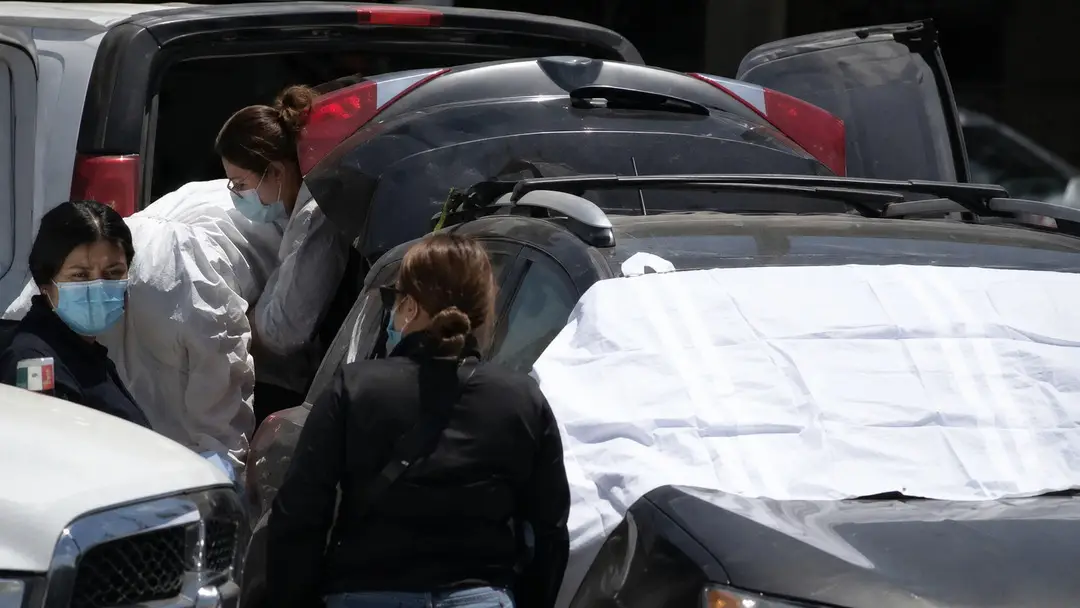
A body found near Iran World Cup camp in Tijuana has turned a local homicide investigation into an international tournament story. The discovery is disturbing on its own, but its proximity to a national team’s training site creates a second challenge: separating confirmed facts from assumptions before speculation outruns the evidence.
The case also lands against a wider Iran security crisis that had already complicated the team’s travel, visas and base-camp plans. That background makes the location politically sensitive, but proximity is not proof of a connection.
Body Found Near Iran World Cup Camp Was Across From the Stadium
Mexican authorities found the body on Friday, June 12, in a parking lot across from Estadio Caliente, the Tijuana stadium Iran had been using for World Cup training. Police opened the trunk of a gray vehicle after a strong odor drew attention to it.
The body was inside a bag, and the vehicle was not located inside the Iranian delegation’s secured training area. That distinction matters. “Outside the camp” can suggest a breach at the team facility, while the confirmed location was a commercial parking area across from the stadium.
The Mexican police investigation remained open, with no publicly established link between the victim, the vehicle, Iran’s players or the World Cup operation. The victim’s identity had not been publicly released as of June 15.
The Location Makes a Local Crime Story International
A homicide investigation in Tijuana would normally remain primarily a local criminal-justice story. The World Cup changes the scale because a crime scene beside a World Cup facility becomes a global security image, even when the event and the crime may be unrelated.
Iran’s presence added another layer. The squad had moved its base from Tucson, Arizona, to Tijuana after geopolitical tensions and visa problems complicated its original arrangements. Training sessions were already taking place under visible security, with the team’s movements receiving international attention.
The body’s discovery therefore arrived in an environment where every unusual event could be interpreted through politics, tournament security or Iran’s disputed presence in the United States. Responsible coverage has to resist that temptation until investigators produce evidence.
What Is Confirmed and What Remains Unknown
The most useful way to understand the case is to separate physical facts from unanswered investigative questions.
| Confirmed Detail | Current Status |
|---|---|
| Discovery location | Parking lot across from Estadio Caliente |
| Where the body was found | Inside a bag in the trunk of a gray vehicle |
| What alerted police | A strong odor from the vehicle |
| Victim’s identity | Not publicly confirmed |
| Connection to Iran’s team | No public evidence establishing one |
| Investigative outcome | Case remains under investigation |
The table shows why the headline requires discipline. The discovery is verified, the location is verified and the investigation is real. Motive, victim identity, suspects and any connection to the tournament remain unresolved.
The investigation belongs to Mexican authorities, not online speculation. Claims about targeting, intimidation, organized crime or political messaging would require evidence that has not been publicly produced.
Tijuana Was Already a Compromise Base
Iran did not choose Tijuana under normal tournament conditions. The team’s original Arizona base became difficult to use after conflict and immigration restrictions disrupted travel for members of the delegation.
The squad trained at the Centro Xoloitzcuintle and Estadio Caliente complex before leaving Mexico on June 14. Reuters documented Iran’s departure for Los Angeles, where the team arrived ahead of its Group G opener against New Zealand.
That timing reduced the immediate operational impact of the discovery on Iran’s training routine, but it did not erase the broader security question. Tijuana has a long-running violent-crime problem; the city recorded 1,219 homicides in 2025, even after a sizable annual decline.
Tournament planners must manage the difference between known local risk and threats directed at a team. Treating every crime near a World Cup site as tournament-related would distort reality. Ignoring the reputational effect would be equally careless.
The Next Investigative Signals Will Define the Story
The victim’s identification is the first major signal. It may establish where the person lived, when they disappeared and whether investigators can trace relationships or conflicts that explain the killing.
The vehicle will be just as important. Ownership records, surveillance footage, license-plate history and the timeline of when it entered the parking lot could narrow the inquiry. Authorities will also need to determine whether the location was selected deliberately or simply used as a place to abandon evidence.
Public communication is another pressure point. Security perception can change faster than operational reality during a global tournament. Clear updates from local authorities can prevent an unresolved homicide from becoming a source of false claims about Iran, FIFA or visiting supporters.
Any confirmed link to tournament personnel would fundamentally change the case. Until then, the evidence supports a serious homicide investigation near a training venue—not a verified attack on Iran’s national team.
The Incident Must Stay Separate From the Team Until Evidence Changes
The body found near Iran World Cup camp is a grim reminder that a global sporting event does not suspend the realities of its host cities. It also demonstrates how quickly geography can turn an ordinary investigative boundary into an international narrative.
The responsible position is neither to minimize the discovery nor attach it prematurely to Iran’s players. The victim deserves identification, the case deserves a full investigation and the public deserves precise language. The next confirmed police finding—not the most dramatic headline—should determine where this story goes.
FAQ
Where was the body found near Iran’s World Cup camp?
The body was discovered inside a bag in the trunk of a gray vehicle parked in a commercial lot across from Estadio Caliente in Tijuana, Mexico.
Has the discovery been linked to Iran’s national team?
No public evidence currently connects the victim, vehicle or suspected crime to Iran’s players, staff or World Cup activities. Mexican authorities continue to investigate the case.
Why was Iran training in Tijuana?
Iran moved its World Cup base from Tucson to Tijuana after geopolitical tensions, visa complications and travel restrictions disrupted arrangements for parts of the team’s delegation.


